What are machine-applied gypsum plasters and when should they be used?
Machine-applied gypsum plaster is a gypsum-based mortar designed for applying interior plaster finishes using a plastering machine. It is primarily used on walls and ceilings made of mineral substrates, such as concrete, brick, silicate blocks or aerated concrete. The mechanical application of the mortar allows large areas to be covered quickly and ensures a consistent finish throughout the building.
This is precisely why machine-applied gypsum plasters are often chosen for the construction of houses, developer-built flats and major renovation projects. Compared to manual application, the work proceeds much faster, and a properly adjusted machine ensures the mixture is prepared and applied evenly. For large areas, this translates into more efficient completion of the work and less material wastage.
Machine-applied gypsum plaster vs hand-applied gypsum plaster – key differences
Machine-applied plastering allows work to be carried out up to 3–5 times faster than the manual method, particularly on large surfaces. The mixture is prepared and dispensed by the machine in a consistent manner, making it easier to maintain constant material parameters.
However, suitable equipment and a team capable of setting up the machine correctly and carrying out the application are required. For a small-scale renovation, the additional cost of the equipment may not be justified; however, for larger areas, machine-applied gypsum plaster is a much more convenient and efficient solution.
Where should machine-applied gypsum plasters be used?
Machine-applied gypsum plasters are intended for interior use – they can be used to finish walls and ceilings made of concrete, brick, silicate blocks or aerated concrete, provided the substrate has been properly prepared. They are not suitable for external use or in areas constantly exposed to damp, such as shower cubicles or saunas. Nor are they suitable for use as a floor screed.
If you’re looking for a solution for an external wall or a room with high humidity, check out our
cement-lime plasters.
Knauf machine-applied gypsum plasters – product overview
As a shop specialising in building materials, we offer genuine Knauf plasters designed for professional plastering work. In this category, you’ll find products suited to various applications, and for selected materials, you can immediately check the coverage and select the quantity required for a specific area.
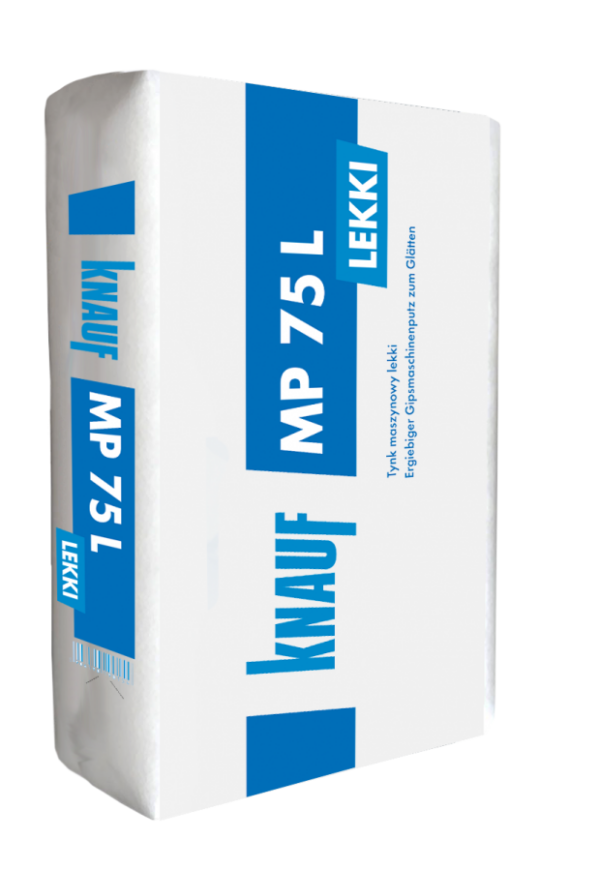
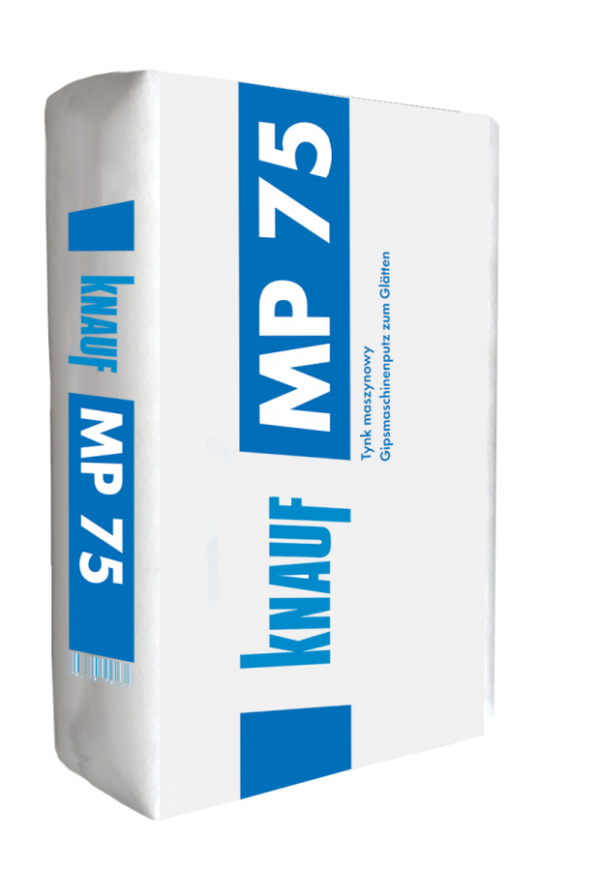
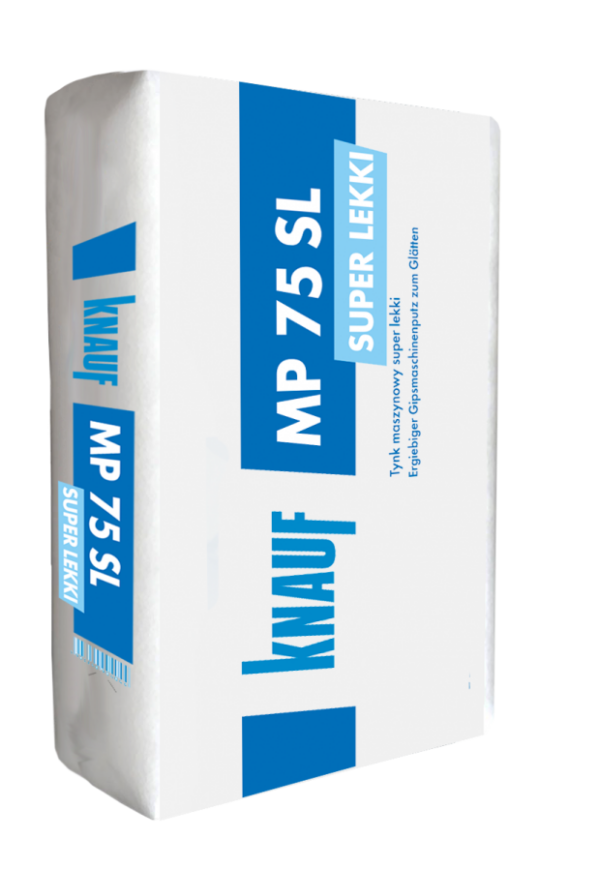
Knauf MP 75 – lightweight machine-applied gypsum plaster
Knauf MP 75 is a lightweight, machine-applied gypsum plaster designed for interior plastering of walls and ceilings. It is applied using a plastering machine and works particularly well on large surfaces where work efficiency is key.
Approximate consumption is around 8–9 kg/m² for a 10 mm layer, and the recommended layer thickness ranges from approximately 8–50 mm, although a single application of up to 25 mm can be carried out without mesh.
The working time is approximately 120 minutes, whilst the time required for drying before painting depends primarily on the layer thickness and the conditions in the room. The product should be used in accordance with the manufacturer’s current technical documentation.
Knauf MP 75 – product details – On the product page, you can check the current price, full specifications and the consumption calculator.
Other machine-applied gypsum plasters in the Knauf range
Depending on current stock levels, the range may also include other Knauf plaster variants, tailored to specific applications and working methods. When choosing a material, consider not only the price per bag, but also the consumption rate based on the planned layer thickness.
Technical properties of machine-applied gypsum plasters
Choosing the right material starts with matching its specifications to a specific project. When comparing products, check first and foremost the consumption rate, the range of possible layer thicknesses, processing time, substrate requirements and strength specifications.
Coverage and consumption per m²
Plaster consumption depends on the type of product and the thickness of the layer being applied. As a rough guide, you can assume around 8–11 kg/m² for a 10 mm layer; however, the actual amount required will be greater if the walls are uneven and require a thicker application.
Setting and drying times
The working time for gypsum plasters is usually around 120–180 minutes, depending on the specific product and working conditions. The drying time, however, depends on the thickness of the layer, the temperature, humidity and ventilation in the room.
As a rough guide, it takes about a week for every 1 cm of plaster thickness to dry. This means that a 2 cm-thick layer may require at least about two weeks before painting under standard conditions. It is not advisable to speed up this process by applying intense heat – drying too quickly may compromise the quality of the finished surface.
Grip and durability
Gypsum plasters require a properly prepared, load-bearing and dry substrate. The surface must be cleaned of dust and any substances that reduce adhesion, and a primer suitable for its properties must then be selected. For absorbent substrates, a suitable primer is used, whilst smooth concrete requires a product that enhances adhesion, such as Knauf Betokontakt.
Strength parameters vary depending on the product, so it is advisable to check the relevant technical data sheet before applying a specific plaster.
How to apply gypsum plaster using a machine – basic principles
Preparing the substrate for gypsum plaster
The substrate should be stable, dry, clean and free from dust and anti-adhesive substances. Absorbent surfaces, such as aerated concrete or brick, must be properly primed, whilst smooth concrete requires an adhesion-promoting agent, such as Knauf Betokontakt. During application and drying, the temperature should not fall below +5°C.
Mix and plastering machine specifications
Always determine the ratio of water to dry mix based on the current product data sheet. Do not adjust it „by eye", as too much or too little water can affect the properties of the mortar. It is equally important to set the machine, pressure, nozzle and feed rate correctly.
Not sure which machine or settings are suitable for a particular product? Contact us – we’ll help you choose the right solution for your planned work.
Prices of Knauf machine-applied gypsum plasters – what affects the cost?
The price of machine-applied gypsum plaster depends primarily on the product chosen, its coverage rate and the quantity required to complete the work. Current pricing and any special offers are also important factors.
For larger orders, the cost per square metre may be more favourable than when buying individual bags. However, it is not worth comparing the price of a single bag alone. The consumption rate per square metre is equally important.
At PKComplex, we guarantee the lowest prices on the market. If you find a comparable product at a lower price, you can contact us to enquire about the possibility of negotiating the price, particularly for larger orders.
Choose Knauf gypsum plaster and order online!
Are you looking for the right machine-applied gypsum plaster for your project? Check out the Knauf products available at the PK Complex shop, compare specifications and prices, and then choose the solution best suited to the type of substrate and your intended application. If you’re not sure which product is right for you, please get in touch – we’ll help you choose the right plaster and the quantity of material needed for the job. For larger orders, you can also ask for a personalised quote.
FAQ – frequently asked questions about machine-applied gypsum plaster
Which machine-applied gypsum plaster should I choose for my flat?
Knauf MP 75 is often chosen for standard flats – a lightweight, machine-applied gypsum plaster that offers good coverage and is easy to work with. Knauf Goldband may be the right solution if you have specific requirements regarding the substrate or finish. If you’re unsure which product is right for you, please contact us and let us know the type of substrate and the planned area to be covered.
Is machine-applied gypsum plaster suitable for a bathroom?
Standard machine-applied gypsum plaster is not suitable for areas constantly exposed to water, such as shower cubicles or saunas. In the bathroom, it can be used in suitable areas, provided the surface is properly protected and ventilation is ensured. For areas in constant contact with moisture, a material designed for such conditions should be selected.
How much does machine-applied gypsum plastering cost per square metre?
The cost depends on the price of the chosen product, the amount used, the thickness of the layer and the contractor’s rate. The approximate cost of the material alone can be around 8–15 zł/m² for a standard thickness, whilst labour costs depend, amongst other things, on the region, the area to be covered and the scope of the work. You can calculate the exact amount of material required using the calculator available alongside the products in our shop.
How long does machine-applied gypsum plaster take to dry before it can be painted?
Drying time depends on the thickness of the plaster, the temperature, humidity and ventilation in the room. As a rough guide, allow about one week for every 1 cm of layer thickness, so for a 15 mm layer, it may take around 10–11 days under standard conditions. Before painting, the plaster should be sufficiently dry, and its readiness should also be assessed in accordance with the manufacturer’s instructions.
Can I negotiate the price for a larger order?
Yes. For larger orders of plastering materials, you can contact PK Complex to request a bespoke quote. Please provide details of the product you’re planning to use, the approximate floor area and the quantity of material required, and we’ll look into whether we can offer you a more favourable deal. PK Complex also guarantees the lowest prices on the market.







 BESTSELLERS
 Mineral wool – Knauf Insulation
 TOOLS
 KNAUF THERM POLYSTYRENE FOAM
 AQUAPANEL systems
 Tiling systems
 TECTEM® internal thermal insulation systems
 External thermal insulation systems
 Flooring systems
 Plasterboard systems
 Plastering systems
 Finishing systems