Wool for insulating pitched roofs and ceilings – an overview of Knauf products
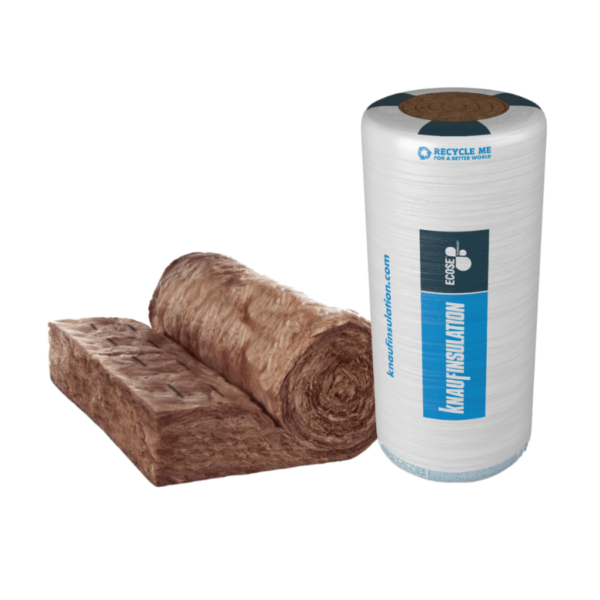
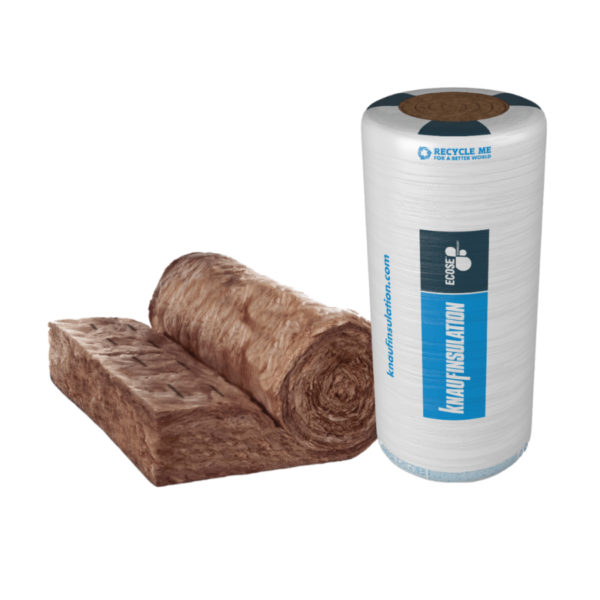
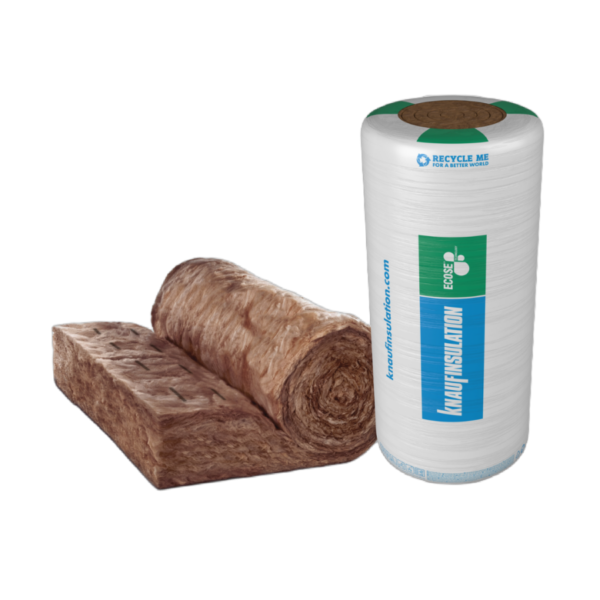
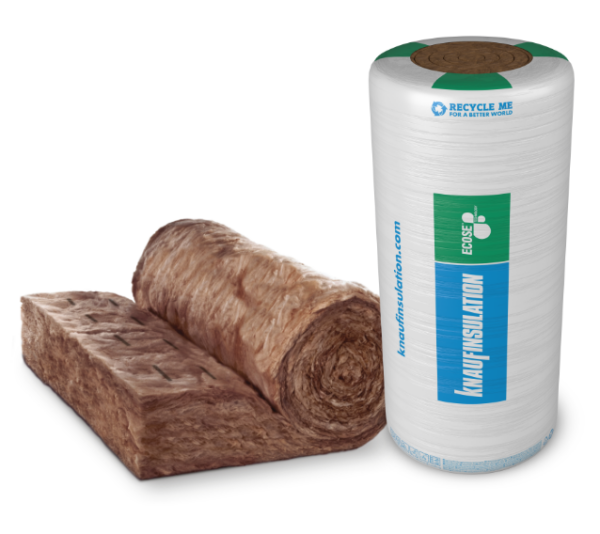
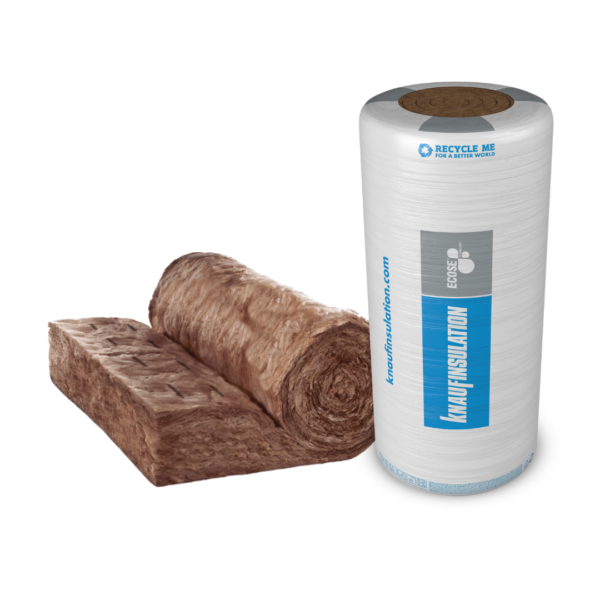
Below you will find the two most popular products for insulating pitched roofs and ceilings: Knauf Unifit and Knauf Naturoll. Both are available in rolls, both are supplied by an official brand partner, and they differ primarily in terms of installation method and lambda value.
Knauf Unifit – insulation for rafters, available in rolls and sheets
Unifit is Knauf glass wool available in two lambda variants: Unifit 032 (λ = 0.032 W/(m·K)) and Unifit 035 (λ = 0.035 W/(m·K)) – the lower the lambda value, the thinner the layer required to achieve the same level of thermal insulation.
The rolls are sized to fit standard rafter spacings (600 mm and 1200 mm), so it is usually not necessary to trim the material to width. Unifit has a fire reaction class of A1 (non-combustible), which is important information for customers enquiring about fire safety. It works well between the rafters of a pitched roof, as well as for insulating floors and unused loft spaces.
Knauf Naturoll – flexible glass wool for pitched roofs
Naturoll is Knauf glass wool in a roll with added natural fibres – flexible, easy to cut and install without the need for specialist tools. It is ideal for pitched roofs with irregular rafter spacing, as it adapts to the shape of the structure without leaving any gaps. Its lambda value is 0.035 or 0.040 W/(m·K), making it suitable for both standard and budget projects. Naturoll is ideal for DIY installation – its soft texture makes it easy to work on your own, without the need for a team.
Mineral wool for the loft – effective insulation for a pitched roof
The loft is one of the most important areas requiring effective thermal insulation, and therefore calls for the use of suitable materials. Mineral wool helps to reduce heat loss and also improves living comfort.
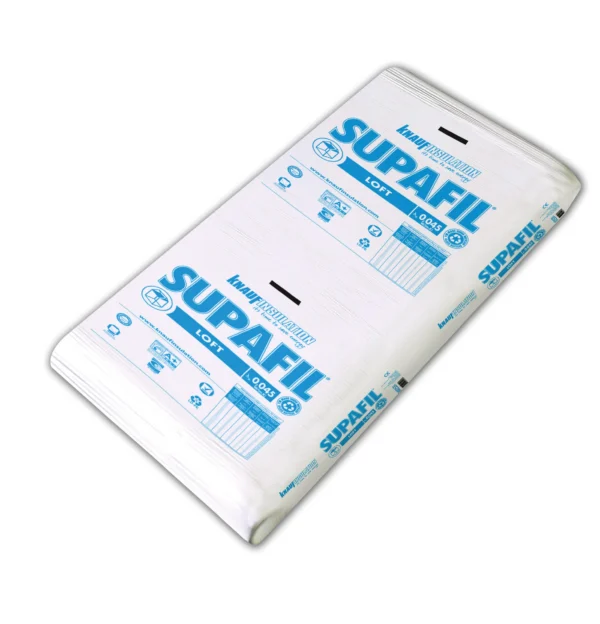
Roofing wool (for attics) of the correct thickness effectively limits the penetration of cold during the heating season and also prevents living spaces from overheating in summer. The mineral wool for pitched roofs available in our range has been designed using modern technology and can be installed between the rafters, ensuring the space is tightly filled.
It is worth remembering that insulating attics with Knauf mineral wool also provides an excellent acoustic barrier, which dampens the sound of rain and external noise. Thanks to its flexibility, the mineral wool fits perfectly between the rafters, eliminating the risk of thermal bridges.
Mineral wool for ceilings. What solutions do we offer?
We stock a range of insulation materials suited to different types of ceiling: you’ll find insulation for both concrete and timber ceilings. Each type will effectively reduce heat loss, improving thermal comfort indoors. Our range also includes mineral wool for flat roofs, intended primarily for use in multi-storey and industrial buildings. Proper insulation of this type of surface helps to maintain stable conditions inside the building and reduces energy loss.
It is also worth bearing in mind that well-chosen mineral wool for ceilings (both concrete and timber) effectively reduces noise, which is particularly important in multi-storey buildings.
If you’re looking for high-quality mineral wool for your ceiling, our products will certainly enable you to carry out your project to the highest standard without putting excessive strain on your budget.
Insulation costs – the price of mineral wool for the loft and roof
The cost of insulating a building depends on many factors, such as the thickness of the material, its thermal insulation properties and its intended use. We offer all materials, including 15 cm and 20 cm mineral wool, at attractive prices, backed by high quality.
It is worth bearing in mind that the cost of roof insulation materials also varies depending on the type of installation – mineral wool laid between rafters may require a different solution to the variant designed for insulating concrete slabs.
You’ll find the current prices for Knauf Insulation mineral wool listed directly alongside each product – these are updated regularly. At PK Complex, we ensure competitive purchasing terms for both private customers and contractors. If you have received a more favourable offer for the same product, please contact us – we will look into the possibility of providing a better quote.
FAQ – frequently asked questions about wool for roof insulation
What thickness of mineral wool should be used for a pitched roof in 2026?
In accordance with the technical specifications of WT 2021 (applicable to new buildings), the U-value for a roof/ceiling beneath a habitable loft is ≤ 0.15 W/(m²·K). With Knauf Unifit 032 mineral wool, you can achieve this with a total thickness of approx. 20–22 cm (e.g. 15 cm between rafters + 7 cm beneath the rafters). With Naturoll 035, you will need approx. 23–25 cm. For renovations of old buildings, the requirements may differ – please consult a designer.
Is Knauf Unifit suitable for a flat roof?
Not directly. Unifit is mineral wool designed for vertical or diagonal installation (between rafters). For a flat roof, you’ll need rigid mineral wool boards from the Knauf Insulation range. If you’re unsure about your roof, please ask us before you buy.
How much wool do I need for a 100 m² roof?
It depends on the thickness and size of the roll or sheet. For a two-layer system (15 + 7 cm), you’ll need approx. 100–105 m² of insulation per layer for every 100 m² of roof – allow an extra 3–5% to account for waste and offcuts. Use the calculator provided with each product to find out what area a specific quantity of insulation will cover.
Is the wool between the rafters enough, or is a second layer needed?
A single layer is sufficient only if the rafters are at least 20–22 cm deep, which is rare in older buildings. Typical rafters with a depth of 15 cm are not sufficient to meet the WT 2021 requirements. A second layer beneath the rafters also eliminates thermal bridges – it is worth adding this, even if it is not strictly required, as it will save you money on heating for decades to come.