





Blog
Rock wool or glass wool for the loft – which to choose in 2026?

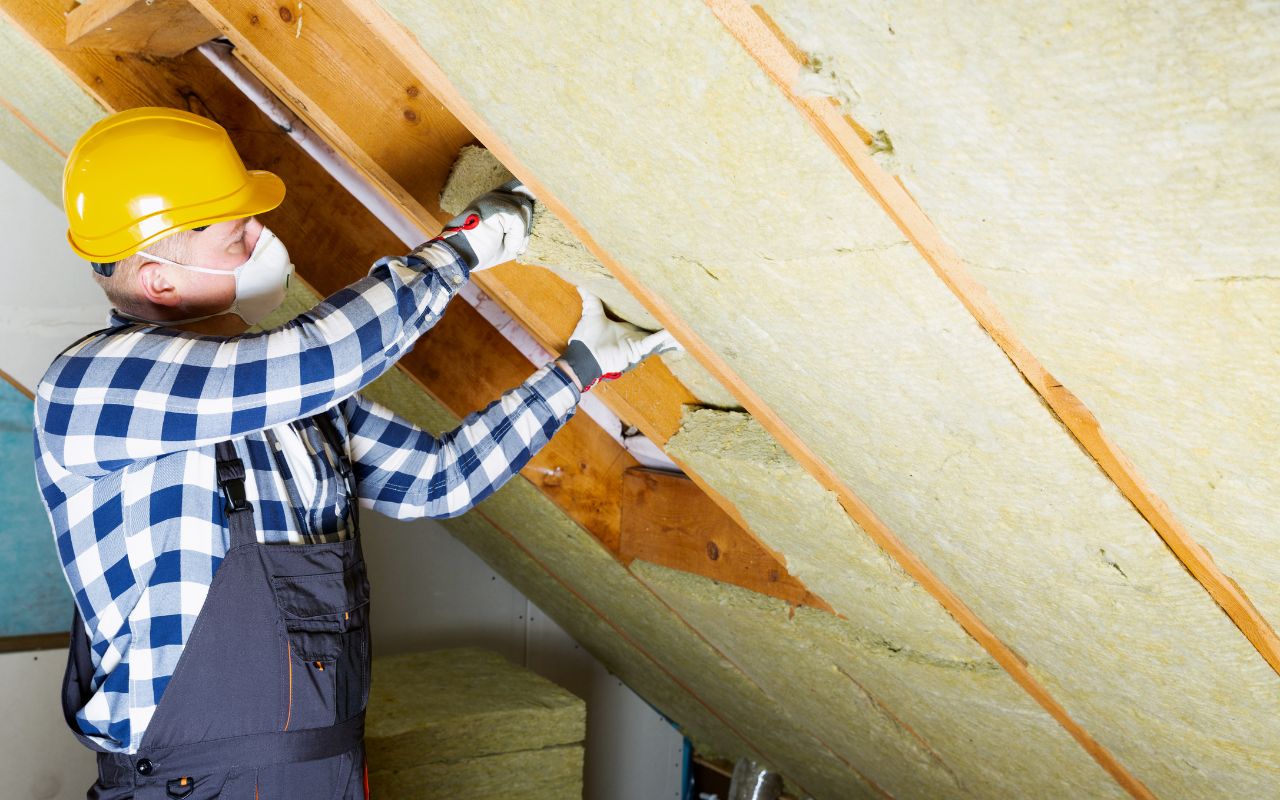
If you’re wondering whether to choose rock wool or glass wool for your loft, you can breathe a sigh of relief. In most cases, the answer is simpler than online discussions suggest. Both materials effectively insulate the roof, but they differ in weight, installation method, fire resistance and price. For most detached houses, glass wool will be the best choice. However, there are situations where it’s worth paying a bit extra for rock wool. Find out which option will be better for your loft.
Key findings
- In most detached houses, glass wool is the better choice for the loft due to its lower weight, easier installation and more favourable price.
- Rock wool offers higher fire resistance and greater mechanical strength, which is why it is suitable for more demanding projects.
- At the same lambda value, glass wool and rock wool provide similar thermal insulation.
- To meet current energy efficiency requirements, it is advisable to use at least 25 cm of insulation, and ideally 30 cm.
- For habitable lofts, the most commonly chosen solution is glass wool with a thermal conductivity coefficient of λ = 0.035 W/(m·K).
Table of contents
Rock wool and glass wool – how do they differ?
Both rock wool and glass wool belong to the group of mineral wools. Both materials have very good thermal insulation properties, are non-combustible and effectively improve a building’s thermal comfort. However, there are differences in the structure of the fibres, the weight of the material and the method of installation.
If you’d like to find out more about the specific differences between these materials, including in the context of walls, façades and ceilings, read the article: Rock wool or glass wool – a general comparison.
How is glass wool made, and how is rock wool made?
Glass wool is produced primarily from quartz sand and cullet. The resulting fibres are thin, light and highly resilient. As a result, once unpacked, the material expands and fills the space between the rafters tightly.
Rock wool is made from basalt and other volcanic rocks. Its fibres are thicker, denser and heavier, which results in greater mechanical strength and very high heat resistance.
You could compare it to two types of wadding. One is soft and springy, the other is denser and stiffer. Both serve their purpose, but they work in slightly different ways.
The typical density of the material is:
- glass wool for the loft: approximately 10–17 kg/m³,
- rock wool for the loft: approximately 30–40 kg/m³.
Main differences in specifications: lambda, weight, temperature resistance
The most common mistake investors make is to assume that rock wool always provides better insulation than glass wool. In practice, this is not true.
For example:
- Knauf Unifit 035 — λ = 0.035 W/(m·K),
- Knauf Naturboard 035 — λ = 0.035 W/(m·K).
At the same lambda value and the same thickness, the thermal insulation properties of both materials are practically identical.
The main differences relate to other parameters:
| Parameter | Glass wool | Rock wool |
|---|---|---|
| Lambda | 0.035 W/(m·K) | 0.035 W/(m·K) |
| Weight | Low | Higher |
| Elasticity | Very high | Average |
| Fire resistance | approx. 200–300°C | up to 1,000°C |
| Installation between rafters | Very easy | More demanding |
For a converted loft, low weight and high resilience are particularly important. That is precisely why so many builders choose glass wool.
Glass wool for loft insulation – advantages and limitations
If we look at construction sites in Poland, the vast majority of new loft conversions are insulated using glass wool. This is no coincidence.
Experience shows that investors are primarily looking for a material that provides good insulation, is easy to install and does not incur unnecessary costs. Glass wool meets all these requirements.
Why is glass wool popular for loft insulation?
Its greatest advantage is its elasticity. Once unpacked, the material expands and fills the space between the rafters completely. This helps to minimise the risk of thermal bridges forming.
In addition:
- it is light,
- it is easy to transport,
- does not place any load on the roof structure,
- Overhead installation is much less tiring,
- It usually costs less than comparable rock wool.
Availability is also a significant factor. Products such as Knauf Unifit 035 are among the most popular materials for insulating lofts.
Of course, there are also certain limitations:
- lower fire resistance than that of rock wool,
- may cause skin irritation during installation,
- requires the use of basic personal protective equipment.
15 cm vs 20 cm glass wool – what thickness is best for the loft?
This is one of the questions most frequently asked by investors.
By 2026, it will no longer be enough to consider only the price of the material. The applicable energy requirements must also be taken into account.
For pitched roofs, the following coefficient applies:
U ≤ 0.15 W/(m²·K)
With a lambda value of 0.035 W/(m·K), the situation is as follows:
| Insulation thickness | Estimated U-value |
|---|---|
| 15 cm | approx. 0.23 W/(m²·K) |
| 20 cm | approx. 0.175 W/(m²·K) |
| 25 cm (15+10) | approx. 0.14 W/(m²·K) |
| 30 cm (20+10) | approx. 0.12 W/(m²·K) |
The conclusion is simple.
A 15 cm layer of mineral wool on its own does not meet current requirements. Even a single 20 cm layer is not enough these days.
We therefore recommend:
- at least 25 cm of insulation,
- ideally 30 cm of insulation,
- 20 cm between the rafters + 10 cm beneath the rafters.
If you’re planning to fit it yourself, be sure to read the guide: How to insulate your loft with mineral wool, step by step.
The best Knauf glass wool products for the loft
For lofts, we usually recommend the following product Knauf Unifit 035 glass wool – for attics.
Why this particular product?
- lambda 0.035 W/(m·K),
- available thicknesses: 100, 150 and 200 mm,
- widths to suit rafter spacings of 60 and 90 cm,
- the convenient design of the rollers,
- very good resilience,
- good value for money.
As an official partner of the Knauf brand, we guarantee the authenticity of the products, consistent availability and expert advice at every stage of the project.

Rock wool for the loft – when is it the right choice?
Does this mean that rock wool isn’t suitable for the loft? Quite the opposite. There are situations where it is actually the best choice.
The higher fire resistance of rock wool – when does this matter?
Rock wool has the highest fire reaction class, A1, and can withstand temperatures of up to around 1,000°C.
This is a significant advantage in the following cases:
- public buildings,
- semi-detached housing with additional fire safety requirements,
- certain green roof projects,
- projects with heightened safety requirements.
In a typical detached house, however, this is not the decisive factor.
Rock wool and humidity – does it perform better in challenging conditions?
Rock wool is more resistant to occasional dampness and releases moisture more quickly.
This may be relevant when:
- the roof is older,
- there is a risk of the covering leaking,
- the loft is unusable,
- The structure does not have a modern roof membrane.
Do bear in mind one rule, however. No mineral wool is resistant to prolonged exposure to water. Even the best material will lose its properties if the roof leaks. Proper ventilation and a watertight roof structure are always the most important factors.
Knauf rock wool products for lofts
The most popular solution is Knauf Naturboard 035 – rock wool.
The product offers:
- lambda 0.035 W/(m·K),
- thicknesses ranging from 50 to 200 mm,
- high fire resistance,
- greater rigidity and mechanical strength.
However, it is important to bear in mind that this material is heavier and usually more expensive than comparable glass wool.
Comparison: glass wool vs rock wool for the loft
Comparison table – specifications, price, weight, installation
| Parameter | Glass wool | Rock wool |
|---|---|---|
| Thermal insulation | ★★★★★ | ★★★★★ |
| Price | ★★★★★ | ★★★☆☆ |
| Ease of installation | ★★★★★ | ★★★☆☆ |
| Weight | Lightweight | Heavier |
| Elasticity | Very high | Average |
| Fire resistance | Very good | Highest |
| Moisture resistance | All right | Very good |
Which type of insulation is easier to install in the loft?
Glass wool is the clear winner. Its resilience means that the material practically holds itself in place between the rafters. This makes things much easier for both professional installation teams and those carrying out the insulation themselves.
The price of rock wool versus glass wool – the difference per 100 m²
For a surface area of 100 m², the price difference can range from a dozen or so to as many as several dozen per cent. In practice, this means that choosing rock wool could increase the project budget by several thousand zlotys. You can read more about the costs in the article: How much does mineral wool cost?.
PK Complex recommendations – what to choose for the loft?
After years of experience and discussions with investors, we are able to provide a very specific answer.
When should you choose Knauf Unifit glass wool?
Choose glass wool if:
- you’re building a detached house,
- if you’re looking for the best value for money,
- Do you want it to be easy to install,
- You’re planning to insulate your loft.
This is a solution we recommend in around 80–90% of cases.
When is it worth paying extra for rock wool?
An additional payment makes sense when:
- Fire resistance is crucial,
- the building has specific design requirements,
- the roof is exposed to harsher humidity conditions,
- The investor is keen to ensure the material offers maximum durability.
Calculator – how much wool do you need for your loft?
Not sure how much material to order? Get in touch with the PK Complex team. We’ll work out the amount of wool you need, help you choose the right thickness and prepare a personalised quote.
Have you found a better deal? Let’s have a chat. Many customers are surprised at just how competitive our terms can be for larger orders.
FAQ – frequently asked questions about mineral wool for loft insulation
Does glass wool irritate the skin more than rock wool?
Yes, it may cause more irritation during installation. It is therefore recommended that you wear gloves, safety goggles and a face mask.
What thickness of insulation is required by regulations for attics?
To comply with the current WT 2021 requirements, a minimum of 25 cm of insulation must be installed.
Can rock wool be combined with glass wool?
Yes. Both materials can be used in a single partition, provided the entire insulation system is installed correctly.
How many layers of mineral wool are needed for the loft?
Two layers are most commonly used: between the rafters and underneath the rafters. This helps to minimise thermal bridges and improve energy efficiency.
Which mineral wool manufacturer is the best?
Knauf is one of the most highly regarded manufacturers. The brand’s products are characterised by excellent value for money, consistent performance and widespread availability.
If you’d like to find out which products are the most popular, have a look at our article Knauf mineral wool – the full range.
Summary
If you’re looking for the best solution for your loft in 2026, in most cases there’s only one recommendation: high-quality glass wool with a lambda value of 0.035 W/(m·K) and a total thickness of 25–30 cm. It offers excellent thermal insulation, is easy to install and provides very good value for money.
However, if you are carrying out a project with stricter fire safety requirements, or if you require additional resilience in challenging conditions, it is worth considering rock wool.
Got any doubts? At PK Complex, we don’t leave our customers to make decisions on their own. We’ll advise you before you buy, help you choose the right product, work out the quantities and guide you through the whole process – just as good friends in the construction industry would.


