






Blog
How much mineral wool do I need? How to calculate the amount of material required for the loft, walls and floor

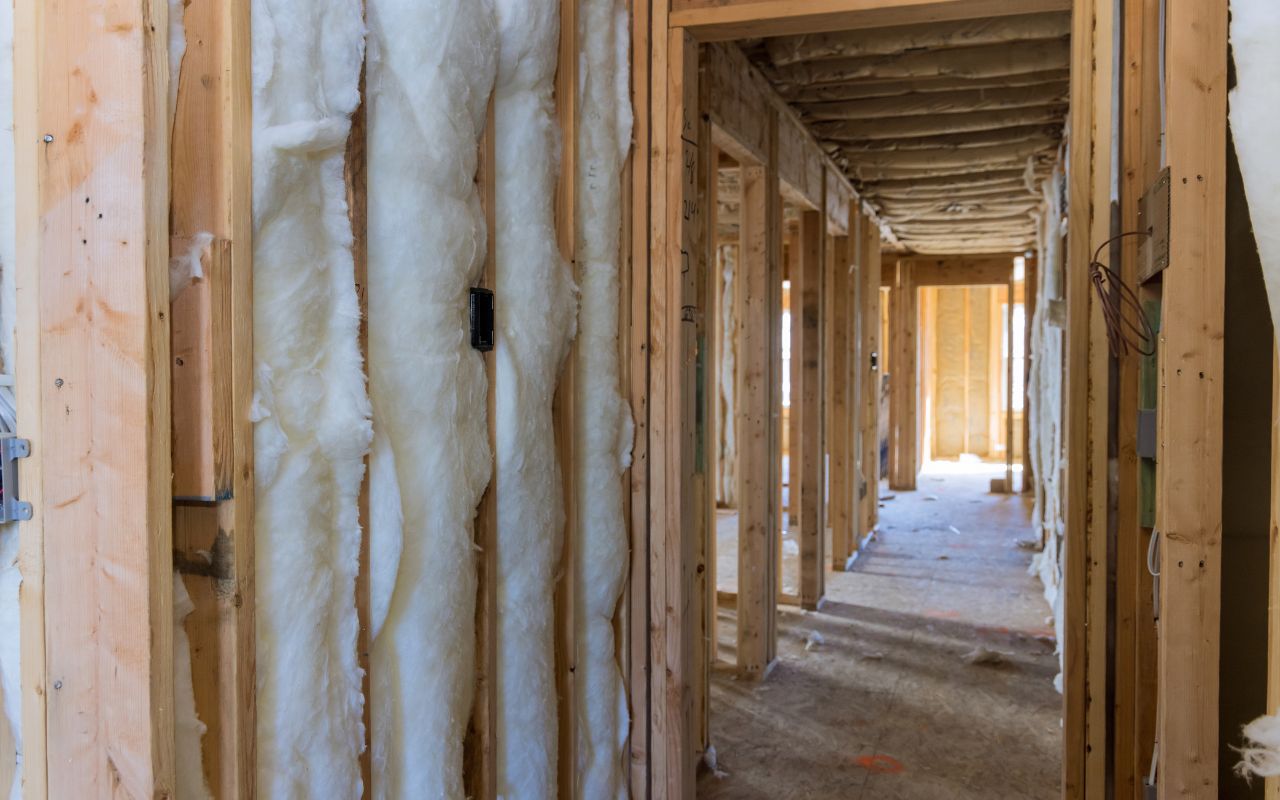
The amount of mineral wool required is determined primarily by the surface area of the partition being insulated, the number of layers and the product chosen. The easiest way is to start by taking precise measurements, and only then check how many square metres are contained in a roll or pack of the specific product. It’s also worth allowing a reasonable margin for offcuts. Read on to find out how to calculate your mineral wool requirements sensibly!
Table of contents
How much mineral wool do I need?
The most important rule is simple: First, work out the area you want to insulate, and only then calculate the amount of product needed to cover it. It is not worth starting with the number of rolls or packs, as different products may vary in thickness, size and the surface area of the material contained in the pack.
The number of layers is also important. If the project specifies a single layer of insulation covering an area of 80 m², you will need approximately 80 m² of material. If the insulation is to be laid in two layers, the amount of wool required will be correspondingly greater.
It is worth adding a margin to the calculated quantity. There is no single universal figure, as the amount required depends on the type of partition. With a simple ceiling, there may be very little waste, whereas with a roof featuring roof windows, valleys and numerous bends, more material will be needed for offcuts.
So, before you buy, don’t just ask, „How many rolls do I need?”. First, work out the surface area of the insulation, the thickness of each layer and the method of installation.
If you already have the measurements, the next step is to choose the right product. To do this, it’s worth checking Knauf mineral wool and compare the available thicknesses of the materials. Importantly, each product comes with a calculator that allows you to quickly work out the area you can insulate.
How do you work out how much insulation you need for the loft?
The loft is the place where it is easiest to make a mistake when estimating the amount of material required. This is because the floor area of the room is not the same as the surface area of the roof slopes. The steeper the roof pitch, the greater the surface area that needs to be insulated.
It is best to measure the actual area of the roof surface, rather than trying to calculate it solely on the basis of the usable floor area of the loft. If the roof consists of two similar slopes, you can measure one and take the other into account. In the case of a more complex structure, it is advisable to treat each slope separately.
The number of layers is even more important. In the case of a converted loft, a two-layer insulation system is often used – the first layer between the rafters and the second beneath the rafters, laid perpendicular to the first. This also helps to minimise the effect of thermal bridges where the rafters run.
It is also important that the thickness of the layer does not alter the area being insulated, but it does change the type of product you need to buy. If one layer is 15 cm thick and the other 10 cm, you’ll need material of the appropriate thicknesses for both layers. You shouldn’t simply buy 25 cm of any old insulation and try to make it fit the structure.
If you’d like to find out more about insulating your loft, do also read: Insulating your loft with mineral wool – a step-by-step guide to doing it yourself
Bevels, windows and cut-outs increase demand
An attic is rarely a perfect rectangle. It contains roof windows, posts, rafters, service ducts and various kinds of irregularities. All these features affect how the insulation is cut.
Therefore, you should allow for more material for the loft than you would for a very simple ceiling. However, this does not mean buying a large amount „just in case”. Mineral wool can be cut to size with precision, and planning the layout of the pieces carefully helps to minimise waste.
It is particularly important not to leave any gaps when cutting the material to size. The wool should fill the space intended for insulation completely. A large excess of material will not improve the performance of the partition if it is laid incorrectly.
How much wool do you need for the walls?
In the case of walls, the calculations are usually simpler than for the loft, but here too, you first need to determine, which part of the partition will be insulated.
If you are building a partition wall from plasterboard, the insulation is located inside the structure. You therefore calculate the surface area of the entire wall that needs to be filled with insulation. There is no need to calculate each space between the studs separately.
For external walls, however, the method of calculation depends on the type of structure and where the insulation is installed. Different rules apply when insulating a wall from the outside, different ones when insulating from the inside, and yet others when filling a timber-framed wall.
It is also worth taking larger openings into account. If the wall being insulated has large windows or doors, their surface area reduces the amount of material required. However, in the case of small openings, it is not always worth making the calculations down to the last centimetre – some of the material will be used for offcuts anyway.
Wool thickness and the amount of material required
This is a common source of misunderstanding. Wool with a thickness of 10 cm and 15 cm may be intended for the same surface, but they are not the same product.
If you have 50 m² of wall to insulate, you will still need enough material to cover 50 m², regardless of whether you choose a layer of 10, 15 or 20 cm. What does change, however, is the volume of the material, the packaging and, often, the price per square metre.
That’s why you should always check when making a purchase the thickness of a particular variant, rather than just the product name. The same range of wool may be available in several versions.
How much mineral wool do I need for the floor?
When insulating a floor, calculating the area is relatively straightforward. For a room with a regular shape, simply measure its length and width, then multiply the two dimensions together. The result corresponds to the area over which the insulation will be laid.
However, determining … requires further consideration, where the floor is located and what the purpose of using wool is. The choice of floor insulation above an unheated room, such as a garage or a cellar, differs from that for insulation between storeys, where the main purpose of the insulation may be to reduce sound transmission.
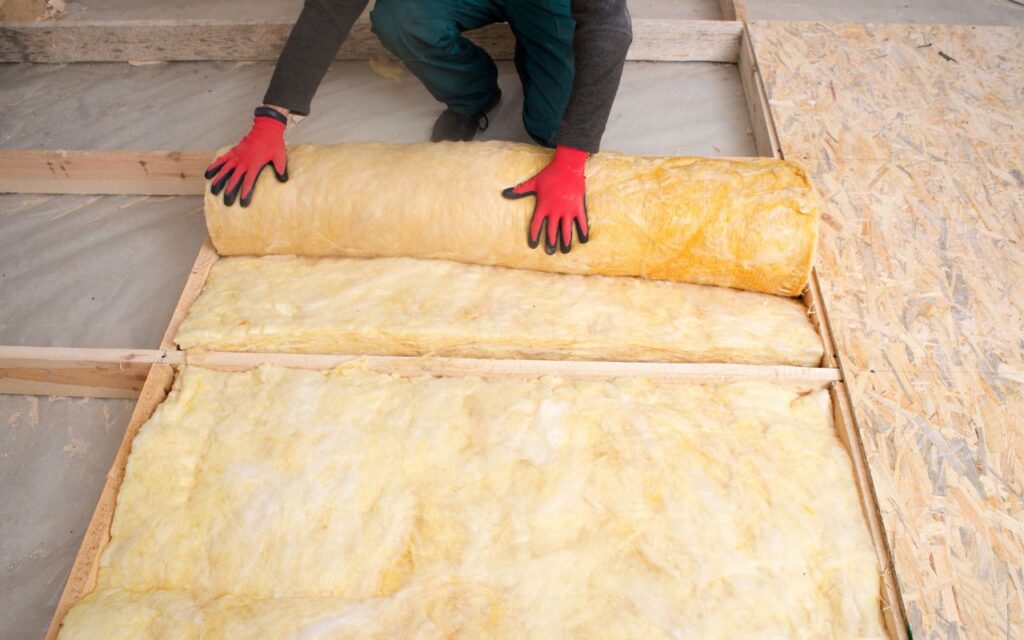
When laying the wool on the floor, the material should be cut to fit the entire area to be insulated. If the floor has a regular shape, the amount required is essentially equal to its surface area. Where the room layout is more complex, it is worth allowing for an extra margin for cutting the material to size, as well as for areas where the insulation cannot be laid to its full dimensions.
When it comes to soundproofing a floor, it is particularly important to lay the insulation accurately and tightly. Gaps and sections that do not fit together properly can reduce the effectiveness of the insulation. Therefore, when purchasing the material, it is worth allowing for a small amount of extra, but this should not be seen as a substitute for correct installation.
How much mineral wool should you buy?
You should have enough fabric to avoid having to buy more, but this doesn’t mean you should buy several dozen per cent more for no reason.
With a large, regular-shaped area, offcuts are usually small. The situation is different in an attic with numerous sloping walls, windows and structural elements. The more complex the area, the more important it is to allow for sufficient extra material.
A good starting point is approximately 5–10% above the calculated area, but this should not be regarded as a strict rule. With a very simple ceiling, less will suffice, whereas with a highly compartmentalised loft, more may be needed.
It is also worth bearing in mind how the product is sold. If the material is only available in specific rolls or packs, the result should be rounded up to a full pack. Any remaining material can then be used to fill in smaller gaps in the insulation.
How do you convert square metres into rolls or packs?
It is only at this stage that it is worth moving on from surface area to the number of packages.
Each product has a specific surface area per roll or pack. This figure may vary depending on the thickness. It cannot therefore be assumed that every roll of a particular type of wool covers exactly the same number of square metres.
For example, a roll of wool of a thinner gauge may have a different surface area to a roll of the same product in a thicker variant. Therefore, before purchasing, please check the product description:
- wool thickness,
- the surface area in the package,
- the number of items per pack,
- method of sale,
- availability of the selected option.
Only then can you work out how many full packs you’ll need.
Don’t compare products based solely on the price per roll
The price of a single roll can be misleading. If one costs 100 zł and another 130 zł, this does not automatically mean that the first one is cheaper. Rolls may vary in surface area, thickness and specifications.
It is far better to compare the price per m² for the same thickness and similar performance characteristics. In the case of insulation materials, one must also take into account the thermal conductivity, acoustic properties and intended use of the product.
What should I do if I need two different thicknesses?
This is a common situation when insulating an attic. The first layer may be a different thickness to the second, as each is located in a different part of the structure.
In this case, the requirements must be considered separately for each layer. It is not enough to know that, in total, you need a certain number of square metres of wool. You also need to work out how much material you need in specific thicknesses.
For example, for an area of 100 m² and two layers, you may need 100 m² of product 15 cm thick and 100 m² of product 10 cm thick. The total area of the material is then 200 m², but these are two different product variants.
Breaking down the requirements in this way makes it much easier to place an order later on and reduces the risk of buying the wrong thickness.
How should you prepare for buying mineral wool?
Before placing your order, please have a few basic details to hand. First and foremost, you will need the surface area of the partition to be insulated, as well as details of the number of layers and the required thickness of each one.
Next, choose a specific product and check how many square metres of material are contained in one pack. Only then should you work out how many rolls or packs you will need.
If you’re not sure whether you’ve calculated the amount of material correctly, it’s a good idea to draw up a simple breakdown for each compartment. For example: attic – 120 m² – two coats; walls – 45 m² – one coat; floor – 30 m² – one coat. This format is much more useful when selecting products than a single total figure in square metres.
For larger projects, it’s also worth checking that all the variants you need are available in sufficient quantities. This will help you avoid a situation where, once work has started, you realise you’re short of a few rolls of a particular thickness.
FAQ – Frequently Asked Questions
How much mineral wool do I need for 100 m²?
For every 100 m² of surface area to be insulated, you will need approximately 100 m² of insulation wool for a single layer. If the insulation is to consist of two layers, you will need approximately 200 m² of material.
How much mineral wool should you buy?
It is usually advisable to allow for an extra 5–10% to cover offcuts and waste. For simple surfaces, a smaller allowance may suffice, whereas for a complex loft with numerous sloping surfaces, windows and changes in level, more material may be required.
How do you work out how much mineral wool you need for the loft?
First, you need to calculate the actual area of the roof slopes, and then take into account the number of layers, the thickness of each layer, and the allowance for off-cuts. The floor area of the loft should not be equated with the area of the roof slopes, as these are usually different.
Does the thickness of the wool affect the amount of fabric required?
No. If you need to insulate 50 m² of surface area, you will need 50 m² of wool in a single layer, regardless of its thickness. The thickness, however, does affect the choice of a specific product, its volume and the way it is packaged.
How do you convert square metres of wool into the number of bales?
Divide the required area, including the margin, by the area of insulation contained in a single pack, then round the result up to the nearest whole number of packs. Before purchasing, check the area specified for the particular product variant.


