






Blog
Which plasterboards should you choose? Types and uses

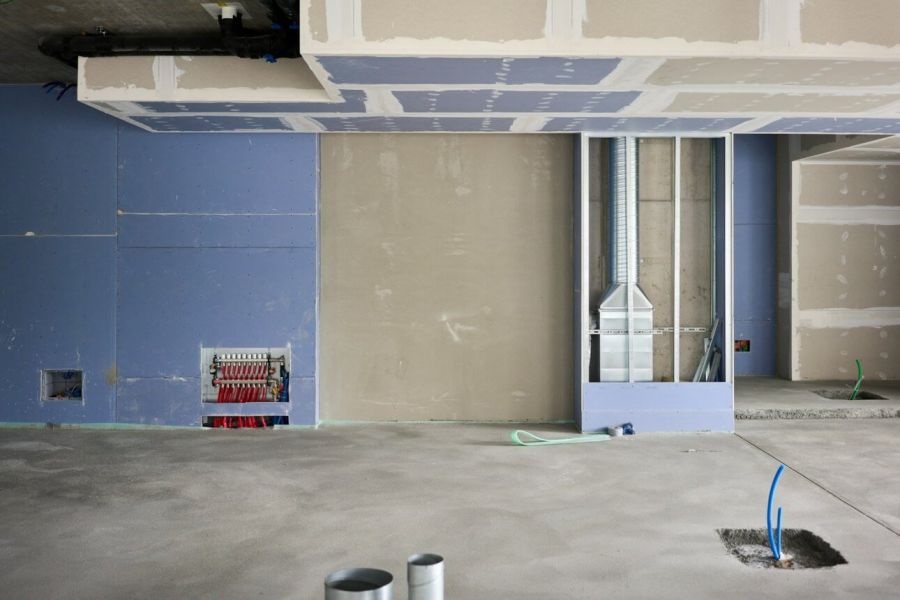
In the construction industry, plasterboard panels remain a tried-and-tested solution. Known for their versatility and ease of installation, they have been used for years both in the interior finishing of flats and in large-scale commercial projects. Choosing the right type of board not only ensures stable partitions but also meets specific acoustic or fire safety requirements. And this is where the questions arise – which boards are suitable for ceilings and which for walls? When should you opt for a fire-resistant variant, and when for acoustic boards? In this article, we present the plasterboards available on the market – from standard to specialist versions. We discuss their properties, intended uses and practical buying tips. At the end, you’ll also find a comparison table to help you choose the right product for your project.
Table of contents
- Types of plasterboard
- The practical application of plasterboard
- Price of plasterboard
- Comparison and recommendations
Types of plasterboard
Although at first glance all plasterboards look similar, their properties can vary drastically. These differences stem from the structure of the gypsum core, the additives used, and their fire and acoustic classifications. The choice of the right variant should not be left to chance – it determines not only the durability of the installation, but also the safety and comfort of the rooms.
Fire-resistant plasterboard
Where a higher level of fire resistance is required – for example, in public buildings, stairwells, boiler rooms or garages – fire-resistant plasterboard are the first choice. Their core contains special additives (e.g. glass wool) which, in the event of a fire, slow down the transfer of heat and limit the spread of fire. What are their main features?
- Used in partitions requiring a fire resistance rating (EI 30, EI 60, EI 120),
- essential for the installation of service ducts, cable routes and ventilation systems,
- comply with the requirements of technical and building regulations relating to fire safety,
- They effectively protect the building’s structure, allowing more time for evacuation and for the emergency services to respond.
Depending on their thickness and the installation system used, they can provide fire resistance of up to 120 minutes. It is worth noting that, in addition to the boards themselves, their correct installation and the selection of suitable fire-resistant tapes and profiles are of crucial importance.
Acoustic plasterboard – plasterboard with sound insulation
In modern residential and office construction, there is an increasing focus on improving acoustic comfort. Acoustic plasterboards are the answer to these needs. Their increased mass and core construction limit the transmission of airborne sound – which translates into a higher Rw rating. Where and why is it worth using plasterboards with acoustic insulation?
- In partition walls separating rooms, offices, conference rooms or private offices;
- for use in suspended ceiling systems, particularly where sound absorption from upper storeys is required;
- when modernising interiors in older buildings, where contemporary sound-absorption standards are lacking;
- in rooms where acoustic comfort affects the quality of life – bedrooms, children’s bedrooms and home studies.
They are ideal for building structures where, in addition to soundproofing, the durability and stability of the structure are also important. Their effectiveness can be further enhanced by using double cladding and flexible sealing tapes at the joints.
Plasterboard with an impregnated layer
Another type is plasterboard with a water-repellent core – that is, ready-to-install panels with a moisture-resistant material integrated at the factory. Such panels are ideal for rooms with periodically rising levels of air humidity, such as bathrooms and kitchens. Why do so many property developers choose to install them?
- They enable the construction of additional walls or the levelling of existing ones in rooms with higher humidity,
- They are ideal not only for bathrooms and kitchens, but also for spaces such as laundry and drying rooms, utility rooms, storerooms, gyms and changing rooms (e.g. at swimming pools).
Standard panels
Finally, it is worth mentioning the most common type – standard panels. These are primarily used in partition walls, suspended ceilings and service duct cladding. Although they do not offer any special fire-resistant or sound-absorbing properties, their attractive price and ease of installation make them the standard solution in many projects. What is a typical application for standard boards?
- In living rooms, hallways, lobbies and spaces with stable climatic conditions,
- as a facing layer in drywall systems (partition walls, ceilings, recesses),
- for the cladding of steel structures, ventilation ducts, flush-mounted installations,
- in flat and house renovations – its ease of handling and light weight make it easy for one person to work with.
The practical application of plasterboard
Choosing the right type of plasterboard is only the first step. Equally important is its correct application – in accordance with its intended use, the requirements of the partition or the technical specifications. In practice, the differences between installing boards on a ceiling and on a wall have a direct impact on user comfort, durability and running costs.
Plasterboard panels for ceilings
Installing plasterboard on a ceiling requires particular precision and a suitable suspension system. Due to the forces of gravity, the supporting structure must be rigid and securely anchored to the ceiling. It is equally important to select the right type of board – where acoustic or fire-resistance requirements apply, a standard board will not suffice.
What to look out for:
- board thickness – minimum 12.5 mm; for large spans, 15 mm is recommended,
- appropriate spacing between hangers and support rails (usually every 40–50 cm),
- the use of ceiling panels with additional properties, such as fire-resistant or sound-absorbing properties,
- Avoiding localised overloads – any additional fixtures (e.g. light fittings) require special support.
Plasterboard panels for walls
In wall construction, plasterboard is usually fitted onto a steel framework or directly onto the masonry (glued using gypsum plaster). The option of using a single or double layer makes it easy to adapt the partition’s specifications to the user’s requirements.
Installation instructions:
- to improve sound insulation – use a system with double cladding and a mineral wool insert,
- where fire safety requirements apply – use fire-resistant panels and dedicated system profiles,
- in damp rooms – opt for waterproof versions,
- At panel joints – use reinforcing tape and flexible fillers.
Ceiling panels – specialised solutions
In commercial premises, offices and medical facilities, ready-made ceiling panels fitted within a grid system are increasingly being used. They allow quick access to service installations whilst also improving the acoustic performance of the interior spaces.
Benefits and uses:
- quick assembly and disassembly of individual components,
- the ability to replace individual panels without affecting the entire structure,
- improving aesthetics and performance characteristics (light reflection, reduction of reverberation),
- a wide range of options – from classic plain designs to perforated ones with an insulating layer.
Solutions of this kind can also be found in flats – particularly where there is a need to conceal services or uneven ceilings without major structural alterations.
Price of plasterboard
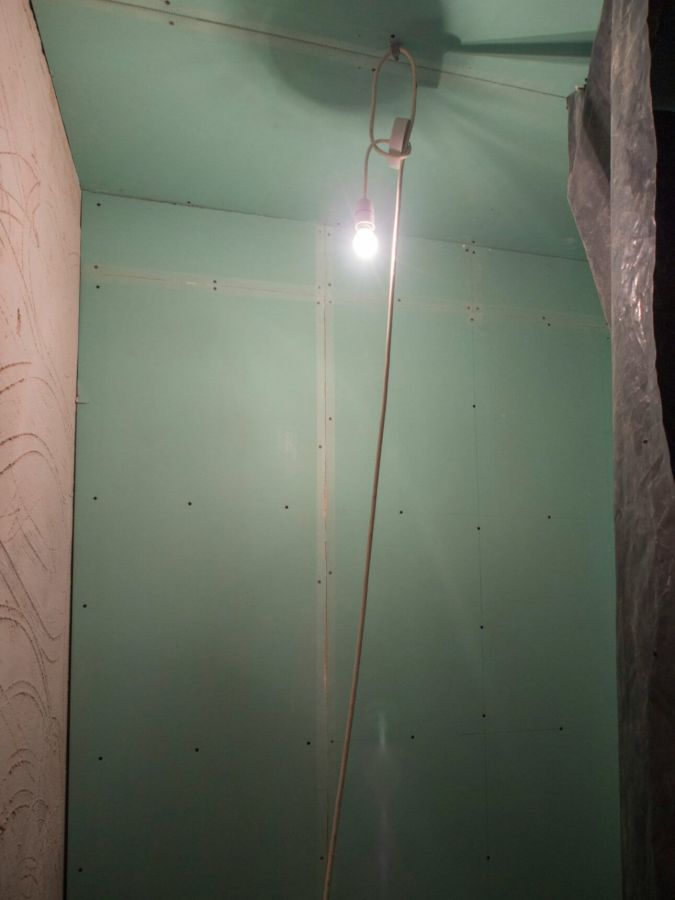
The cost of purchasing building materials is of crucial importance when planning any renovation or construction project. In the case of plasterboard, price differences may stem not only from the manufacturer, but above all from the type of technology used and the product’s performance characteristics. The price of a plasterboard panel is determined by the combination of its performance characteristics, technical specifications, the capabilities offered by the product, and the quality of the raw materials used in its manufacture.
Price range and factors affecting cost
It is worth bearing in mind that, although standard panels are among the cheapest, in many cases it is necessary to use more expensive, specialised variants – which, ultimately, helps to avoid additional work or upgrades in the future.
The price is influenced by:
- the thickness and size of the board (the standard size is 1200 × 2000 mm; non-standard sizes are often more expensive),
- core type (standard, fire-retardant, acoustic, water-repellent),
- the presence of an additional layer (cardboard impregnated with a fungicide, additional insulation),
- certificates and technical classifications (e.g. EI, Rw, moisture resistance),
- transport and storage costs (for bulky orders).
How do you work out the total cost?
When planning a purchase, it is worth taking into account not only the unit price of the board, but also the set of fitting accessories and labour costs. A single board is just one component of the entire drywall system.
The following should be added to the total cost estimate:
- steel sections (UD, CD, UW, CW),
- screws, slings, fasteners and reinforcing tapes,
- fillers and primers,
- any insulation materials (e.g. mineral wool),
- labour – on average between 60 and 100 zł/m², including materials and installation.
It is good practice to allow for 10–15% of extra material, particularly in the case of unusual rooms or complex machining operations.
Comparison and recommendations
Choosing the right one plasterboard It is worth basing your decision not only on price, but above all on the intended use and technical requirements of the partition. Each type of panel has a specific application and a set of characteristics that should be suited to the conditions in which the room will be used.
Technical advice before purchasing
When buying a CD, it’s worth checking:
- fire resistance class (e.g. EI 60),
- sound insulation level (Rw value),
- the presence of the manufacturer’s markings and compliance with the PN-EN 520 standard,
- availability of dedicated profiles and fitting accessories.
Choosing the right plasterboard is a decision that directly affects the durability, safety and comfort of the space. Whether it is a standard living room fit-out, a suspended ceiling in an office, or a wall with enhanced fire resistance, the choice of the correct type of board should be based on the actual requirements of the project. Furthermore, it is worth noting that it is not only the type of board that matters, but also its correct installation and the selection of other construction elements, which are of paramount importance. Therefore, an analysis of technical parameters, performance characteristics and costs is the foundation of a well-planned project.


