






Blog
TOP 5 most common mistakes when laying wool – check you’re not making them

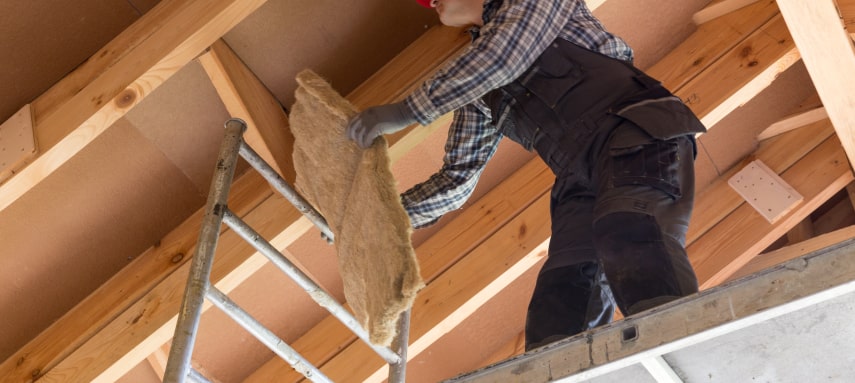
Investing in home insulation is one of the most important decisions you will make during construction or renovation. However, choosing the right material is only half the battle. Even the highest-quality mineral wool, with excellent thermal insulation properties, will not fulfil its purpose if it is installed carelessly or contrary to best building practice. Installation errors not only risk lower indoor temperatures but, above all, result in real financial losses. The high cost of insulating a house means that every mistake hurts twice as much – especially when it comes to light after a few years in the form of damp walls or sky-high gas and electricity bills. Did you know that a poorly cut panel or a break in the insulation can reduce a building’s thermal efficiency by as much as several tens of per cent? Before the team climbs onto the scaffolding or you pick up an insulation cutter yourself, find out what you need to pay particular attention to. We invite you to read our list of 5 critical mistakes that ruin residents’ comfort.
Error 1: Incorrect choice of material thickness and type
Many investors, looking to save money at the purchasing stage, opt for a thinner layer of insulation, hoping that a low lambda (thermal conductivity coefficient) will compensate for the lack of volume. This is a trap. Whilst technical specifications are important, it is the correct thickness that ensures the insulation you choose woolle for insulating the house will provide effective protection against the cold and the heat.
Designers usually specify the required insulation thickness precisely, taking into account current technical conditions. In practice, the following solutions are most commonly encountered:
- 10 cm mineral wool – used mainly as additional filling or in areas where space is limited and every centimetre counts;
- 15 cm mineral wool – a popular choice for double-layer insulation, often used as a base for rafters or as filling for partition walls;
- 20 cm mineral wool – a standard which, when combined with a second layer, enables a house to meet the criteria for an energy-efficient home.
Insulation that is too thin not only poses a risk of partitions freezing through, but also makes it difficult to meet the heat transfer coefficients required by law U. Bear in mind that insulation is a one-off process – adding further centimetres in the future will involve huge costs for renovation and dismantling the existing cladding.
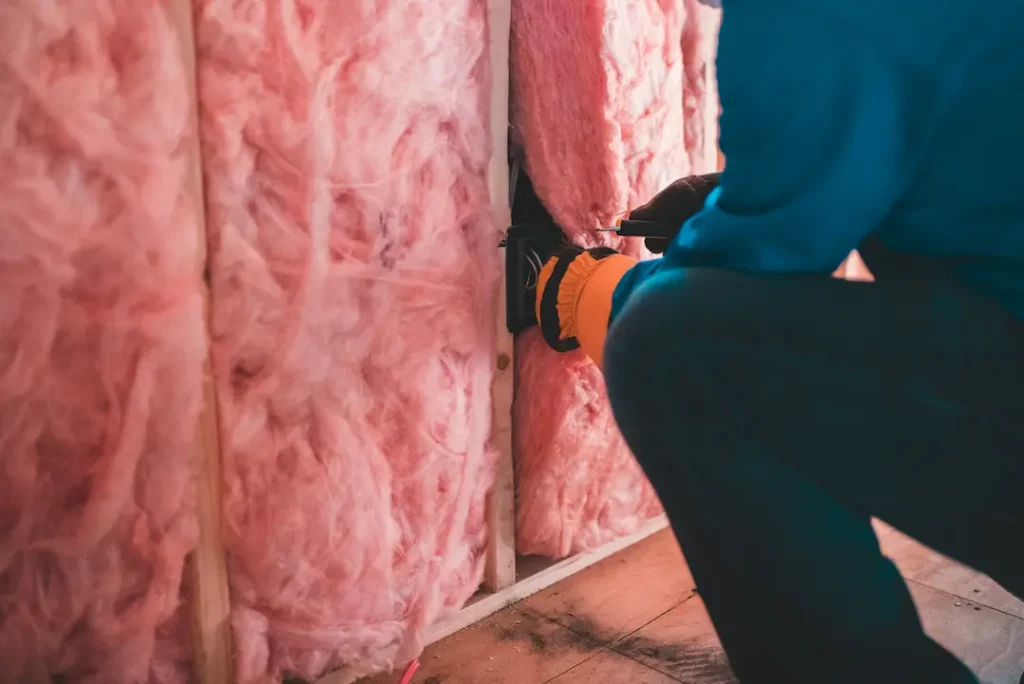
Error 2: lack of airtightness at joints (thermal bridges)
Even the best insulation wool will not fulfil its purpose if gaps form between the individual sheets, through which warm air will escape in winter. The biggest challenge for installation teams is usually mineral wool for the loft, where the complex geometry of the roof, the presence of rafters, wall plates and numerous slopes contribute to the formation of leaks. A common mistake is cutting the material to fit the rafter spacing exactly, which, over time – due to the natural movement of the roof structure – leads to gaps forming. To effectively eliminate thermal bridges, the insulation should be cut with a slight allowance, usually around 1.5 to 2 centimetres wider than the rafter spacing, so that the insulation wedges itself into the space and tightly fills every nook and cranny. The principle of „staggered” installation is also important here. Instead of a single thick layer, it is better to use two thinner layers, so that the joints of the first layer are completely covered by the full surface of the second. Property owners often wonder which type of insulation is best for the loft in such a scenario – it is worth choosing products with high resilience, which, once expanded, fit snugly together, creating a uniform and continuous thermal barrier across the entire roof surface.
Error 3: unstable structural assembly and lack of adequate fastening
Another critical point is installation in vertical partitions, where gravity becomes the greatest obstacle to airtight insulation. Incorrectly fixed mineral wool for walls Over time, it may begin to settle, creating voids in the upper parts of the structure, which drastically reduces the building’s thermal efficiency. To avoid such scenarios, professional installation should be based on a few golden rules.
- Correct lacing – a tight weave of fishing line or binding wire holds the fabric close to the structure, preventing it from bulging or slipping;
- Use of system profiles – metal starter and corner profiles provide stable support for the first rows of panels;
- Choosing the right density of material – whether in timber-frame constructions or for internal insulation, mineral wool must have sufficient rigidity to retain its shape for decades.
Although precise installation and the use of additional fitting accessories may slightly increase the total cost of insulating a house, this is a fully justified expense. If wall insulation is not secure, this is a sure-fire way for damp to develop as a result of water vapour condensation in areas where there are gaps in the material.
Error 4: Incorrect management of moisture and vapour barriers
Even the best-installed layer of thermal insulation can lose its properties if we neglect the issue of water vapour movement within the building envelope. The biggest mistake here is a lack of airtightness or the complete omission of protective layers, such as membranes and vapour barriers. Many people wonder whether a vapour barrier film between layers of mineral wool is a good solution – in modern construction, it is standard practice to position it on the side facing the heated rooms to prevent moisture from the interior of the house penetrating the insulation structure. It is important to remember that damp mineral wool drastically loses its ability to retain heat, and in extreme cases can lead to the growth of mould and the deterioration of the roof or wall structure. Errors most commonly occur at the joints in the foil and at points where installations pass through, such as electrical cables or ventilation pipes. If these points are not carefully sealed with specialised tape, so-called ‘dew points’ form, where water condenses. Another common installation error is the use of ordinary garden plastic sheeting instead of professional products with a specific diffusion resistance coefficient Sd. A properly designed system must allow the partition to „breathe” to the outside, whilst effectively blocking the flow of water vapour from the inside, ensuring that your investment in insulation remains dry and effective for decades.
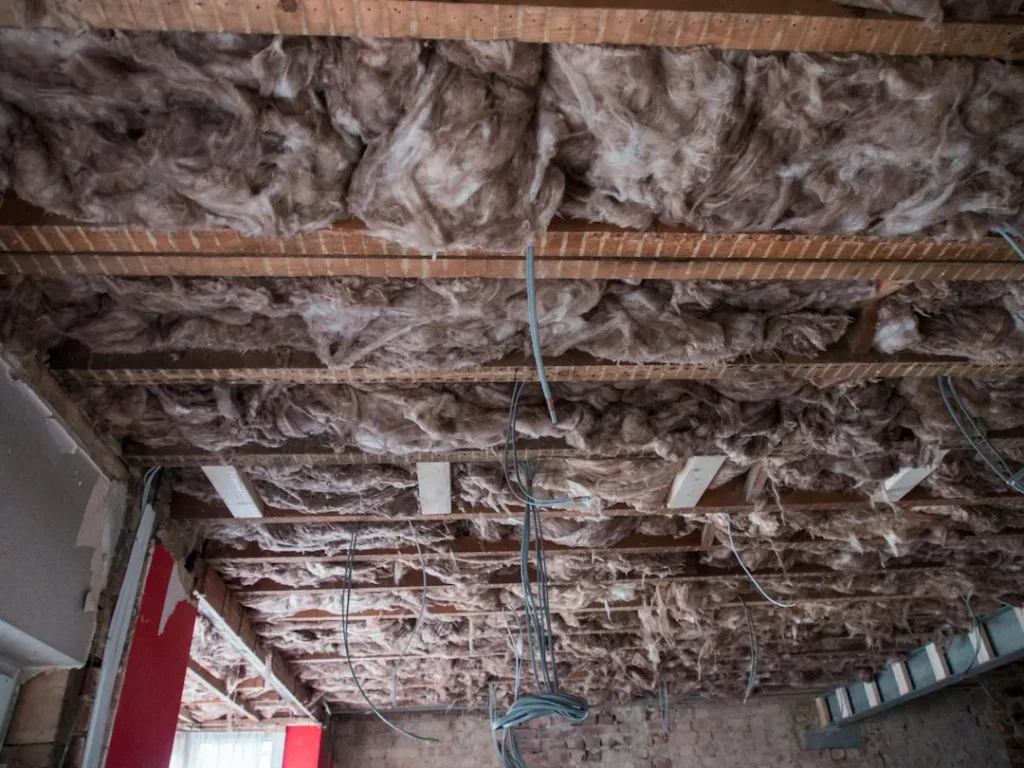
Mistake 5: forcing the wool in and crushing it „by force”
The final, yet extremely common, misconception is the belief that the more material we cram into a given space, the warmer the house will be. Nothing could be further from the truth. The insulating properties of mineral wool stem primarily from the air trapped between its fibres. It is this still air that acts as the actual insulator. The moment you pack the wool down with your knee or fist to fit a thicker slab into a narrower gap, you destroy its structure and remove the air pockets. As a result, instead of protecting against the cold, the compressed material begins to conduct heat almost like a solid material. Always ensure that, once laid, the wool is fluffy and fills the space loosely but tightly. If you need to fit it into a narrower gap, always use a knife to trim the material with a slight margin, rather than cramming it in.
Properly installed thermal insulation is an investment that pays for itself every day – not only in the form of lower heating bills, but above all through greater comfort for the household. As we have seen, even the highest-quality mineral wool will not perform as intended if the installation process is neglected. Success lies in the details: in those few centimetres of extra length when cutting, in carefully sealing every centimetre of the foil, or in resisting the temptation to force the material into place. Remember that mistakes made during the insulation stage are among the most difficult and expensive to rectify. Often hidden beneath plasterboard, they only become apparent when damp appears on the walls or when, despite the radiators being turned up high, the room still feels uncomfortably cold. That is why vigilance is so important – both when doing DIY yourself and when supervising the work of a hired team. Knowing which mistakes to avoid is your most effective tool in the quest for a durable and safe home. When choosing materials, always view insulation as a complete system. Only a combination of the correct thickness of insulation, a tight vapour barrier and precise workmanship will ensure that your building can „breathe”, whilst remaining an impenetrable barrier against both frost and heat.


