






KNAUF MP 75 L Gypsum Plaster
30,17 zł
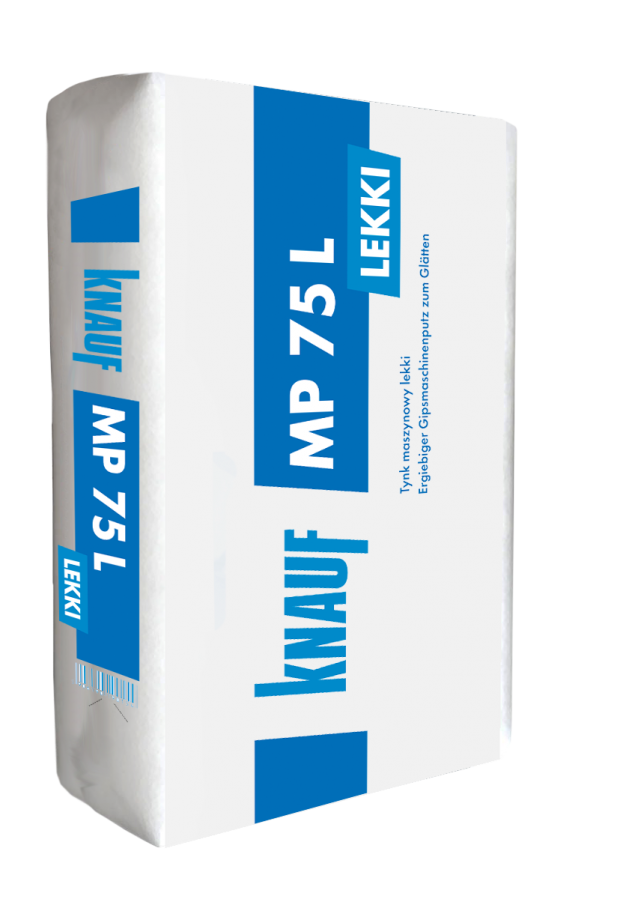
MP 75 L – Machine-applied gypsum plaster, lightweight
A factory-produced, lightweight, dry gypsum mortar containing lightweight aggregates.

Fast delivery
Within Poland

Safety
Careful packaging

Customer support
Contact via chat

Top quality
A trusted brand
| Weight | 30 kg |
|---|---|
| Delivery |
Directly – CHEMISTRY – arts ,Kurier – ARTS ,Palette – ART – mix ,Palette – ART – solo |
Product description
Knauf MP 75 L – machine-applied gypsum plaster: properties, uses and prices
Knauf MP 75 L is a premium-grade gypsum machine-applied plaster for interior walls and ceilings. It is applied using a plastering machine, resulting in an even, smooth surface ready for painting or wallpapering. As an official Knauf distributor, we guarantee the genuine product and the lowest price.
Knauf 75 L machine-applied plaster – specifications
MP 75 gypsum plaster comes in 30 kg bags, and the coverage rate is 8 kg/m²/10 mm. The price remains incredibly attractive for a product of such high quality.
Knauf’s MP 75 machine-applied plaster is a guarantee of quality certified by the manufacturer itself.
The product is packed on a KN-WO pallet. The cost of the pallet is 37.00 PLN per unit (net).
- Packaging: 30 kg bag.
- Number of items per pallet: 40.
What sort of plaster is this, and what is it used for?
MP 75 is a factory-produced, lightweight, dry gypsum plaster containing lime and sand aggregates, designed for single-layer machine-applied plastering of internal walls and ceilings.
It is one of the most popular machine-applied plasters chosen by both construction teams and private clients commissioning work from professionals – thanks to its lightweight formula, it puts less strain on the plastering machine whilst delivering a smooth, flawless finish free from streaks and unevenness.
This product is ideal for large areas, where the speed of the work and a consistent finish across every metre of wall are key. If you’re looking for a more comprehensive comparison of products, take a look at our Knauf machine-applied gypsum plasters.
Knauf – Lightweight Machine-Applied Plaster 75. Properties
The proposed Knauf 75 gypsum plaster withstands high temperatures exceptionally well and is a completely non-combustible product. When developing this lightweight plaster, the manufacturer took into account the possibility of driving fasteners into the set surface, so you can safely hammer nails into walls covered with it. Check out the key features of Knauf 75 machine-applied plaster.
- A light formula. Thanks to the use of lightweight aggregates (lime-sand), Knauf 75 plaster is easier to work with and places less strain on plastering machines.
- High performance. Material consumption is only around 8 kg/m² for every 10 mm of layer thickness.
- Microclimate control. Knauf’s lightweight machine-applied plaster has the ability to absorb excess moisture and release it when the air becomes dry, ensuring a healthy indoor climate.
- Vapour permeability. The structure of the plaster allows the walls to „breathe”, preventing moisture from building up.
- An excellent finish. Machine-applied plaster produces perfectly smooth surfaces, free from defects, streaks and unevenness.
- The fire reaction class is A1 – in other words, a completely non-flammable product, which for many customers is the deciding factor in their choice, particularly on building sites where the project is subject to design and supervision.
- The plaster complies with standard EN 13279-1 and is certified by a notified body – a requirement for projects involving technical acceptance.
Where can Knauf MP 75 be used?
MP 75 is suitable for use on concrete, ceramic bricks, silicate blocks, aerated concrete blocks (e.g. YTONG) and plasterboard, provided the surface has been primed beforehand. It can also be applied over existing skim coat, provided its load-bearing capacity is checked before application.
Use it in all indoor rooms – the living room, bedroom, hallway and stairwell. Do not use it in the bathroom or kitchen (wet areas) without additional protection, or outdoors – this plaster is not designed for constant contact with water.
With absorbent substrates, such as aerated concrete, priming is essential – you can read more about this in the guide how to choose the right primer for the substrate before plastering.
How to apply – preparation and machine application
MP 75 is a product designed for machine application using a plastering machine, although in exceptional circumstances (minor repairs, touch-ups) it can be applied by hand – see the FAQ below for details. However, before you switch on the machine, remember: proper substrate preparation accounts for around 80% of the final result’s quality. Skipping this stage is the most common cause of complaints regarding machine-applied plaster.
Surface preparation and priming
- Clean the substrate – remove dust, loose particles, traces of old plaster, oil stains or formwork marks.
- Check the load-bearing capacity – tap the old coating with a hammer; a dull, hollow sound means it needs to be chipped away.
- Moisten or prime – moisten concrete and brick with water; prime aerated concrete and silicate (e.g. Knauf Tiefengrund – primer for plaster) diluted 1:3 with water.
- Fix the plastering battens in place – set up the spirit level and check that they are plumb along the entire height of the wall.
- Wait until the primer has been absorbed – at least 3–4 hours at 20°C.
Plastering machine settings
For standard mixers (PFT G4, Knauf PFT, Putzmeister), use an 8–10 mm nozzle – the exact size depends on the specific model, so treat this as a starting point. The mixture coming out of the pump should have a workable, non-runny consistency – check this by hand; a good mixture will hold its shape.
The approximate ratio of water to powder is 0.5–0.55 litres of water per 1 kg of dry mix, i.e. approx. 15–16.5 litres per 30 kg bag – you will find the exact figures in the product’s technical data sheet (TDS). Set the pump pressure in accordance with the manufacturer’s recommendations for your pump unit, and maintain the water temperature between +15°C and +20°C.
Grinding and surface finishing
Immediately after application, level the surface with a long trowel. Carry out the first trowelling when the plaster begins to set but is still matt and damp – usually 45–60 minutes after application under normal conditions. Trowel with a felt or sponge trowel using circular movements, without applying too much pressure.
A second, optional smoothing after a further 15–20 minutes produces an even smoother surface, ready for filling or wallpapering. Once completely dry, you can apply filler, paint or wallpaper without the need for an additional primer – however, do check the specific requirements of the paint manufacturer you plan to use.
MP 75 vs MP 75 Diamant – which one to choose
| Feature | MP 75 | MP 75 Diamant |
|---|---|---|
| Database | Plaster | Plaster with synthetic fibres added |
| Surface hardness | Standard | Raised (better for corners and impact zones) |
| Scratch resistance | Standard | High |
| Application | Conventional construction | Offices, corridors, high-traffic areas |
| Price (approximate) | Lower | Higher by approx. 15–25% |
| Drying time | Identical | Identical |
| Machine application | Yes | Yes |
If you’re plastering a detached house or a flat, the standard MP 75 will be more than enough – there’s no point in overpaying for specifications you won’t use. Choose the ‘Diamant’ grade if you require enhanced mechanical resistance, for example in communal corridors, stairwells or high-traffic offices, where walls are more prone to knocks and scratches. If in doubt, do get in touch – we’ll be happy to advise you, with no obligation.
FAQ – frequently asked questions about Knauf MP 75 gypsum plaster
Is Knauf MP 75 suitable for ceilings?
Yes – MP 75 is approved for use on ceilings. However, the maximum thickness of a single coat on a ceiling is 15 mm (up to 30 mm on walls). If you need to level a more uneven ceiling, apply two coats, allowing sufficient drying time between them. A plastering machine simplifies application on the ceiling – manual application is possible, but considerably more labour-intensive.
What machines are used to apply MP 75 plaster?
MP 75 can be applied using any standard plastering machine designed for gypsum plasters – e.g. PFT G4, PFT G5, Knauf PFT, Putzmeister MP 25 and similar models. It is essential to set the correct nozzle (8–10 mm) and ensure the mixture has the right consistency. If you are unsure about the settings for your machine, please contact us before purchasing – we will be happy to help.
Can MP 75 be applied by hand?
Yes, but with some limitations. MP 75 is primarily a machine-applied plaster, but the manufacturer permits manual application. When applying by hand, it is essential to mix the compound thoroughly until it reaches a uniform consistency free of lumps – ideally using a mortar mixer. Manual application is more labour-intensive and more difficult to level on large surfaces, but it works perfectly well for small repairs and touch-ups.
What primer should be used before applying MP 75?
The choice of primer depends on the substrate. Concrete and ceramic brick simply need to be dampened with water – for highly absorbent brick, use Knauf Tiefengrund diluted in a ratio of 1:3. Aerated concrete (e.g. YTONG) and silicate blocks must be treated with Knauf Tiefengrund diluted with water in a ratio of 1:3.
Always check old skim coat or plaster for load-bearing capacity and, if necessary, prime with undiluted Tiefengrund. Prime plasterboard with Knauf Tiefengrund or a product specifically designed for plastering plasterboard.


