






Blog
XPS – extruded polystyrene: properties, applications and prices

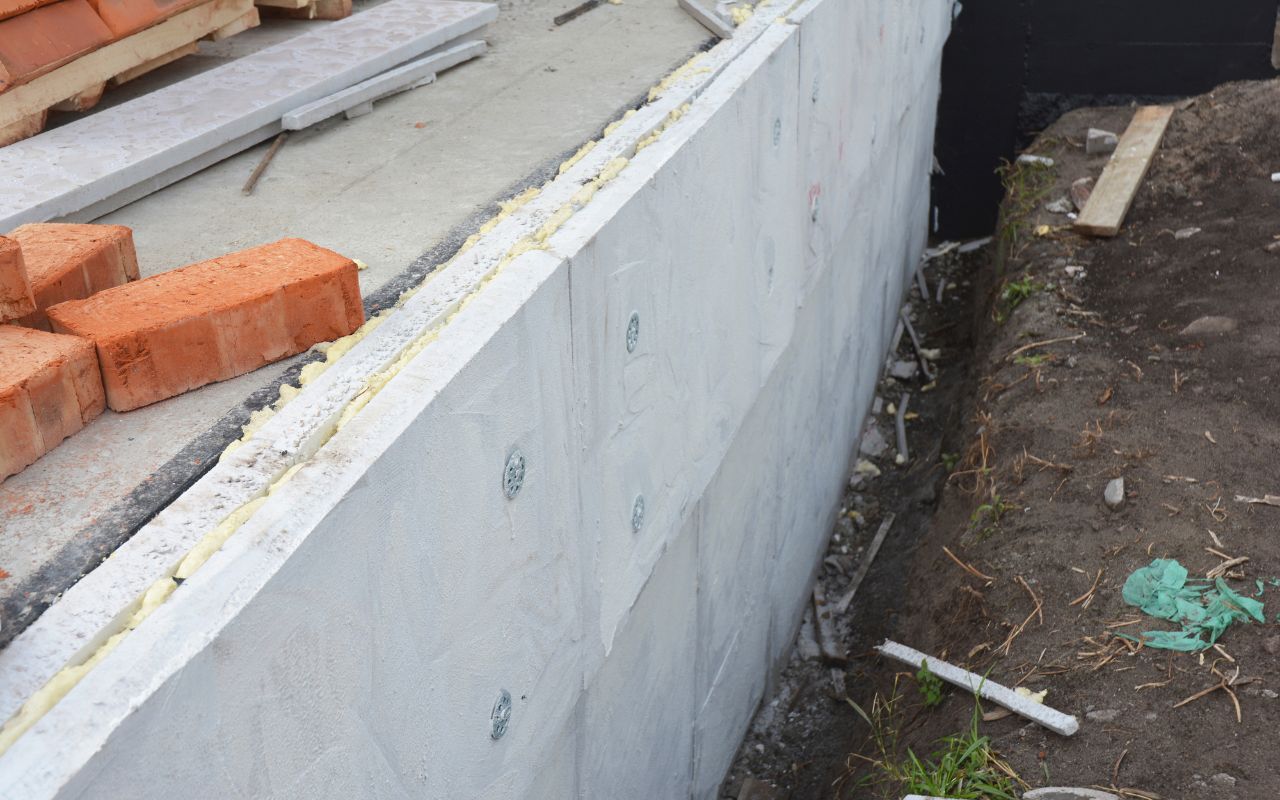
XPS, or extruded polystyrene, is a material that looks like ordinary polystyrene, but is not the same thing. Its closed-cell structure means it absorbs only trace amounts of water, can bear much heavier loads and retains its insulating properties for decades in damp soil. In this post, you’ll find out exactly what XPS is, how it differs from EPS, where to use it and how much it costs. Read on to find out more!
Key findings
- XPS (extruded polystyrene) is characterised by very low water absorption and high compressive strength, which is why it is best suited to areas exposed to damp and heavy loads.
- Compared with polystyrene, EPS does not always offer better thermal insulation, but it is far superior in terms of durability in harsh conditions.
- XPS is primarily recommended for insulating foundations, ground-level floors, terraces, inverted roofs and green roofs.
- When insulating standard external walls, EPS polystyrene is usually sufficient and more cost-effective.
- When choosing XPS boards, it is worth paying attention to their compressive strength (CS) and water absorption (WL) ratings, as these determine their suitability for use and durability.
Table of contents
What is XPS – extruded polystyrene?
XPS is a rigid polystyrene foam produced by extrusion. The abbreviation ‘X’ stands for ‘extrusion’ – polystyrene granules mixed with a blowing agent pass through an extruder under high pressure and temperature, forming a homogeneous board with closed, regular cells. The result? A material with no joints, no lumps and no weak points.
How is XPS made, and how does it differ from EPS?
EPS (white polystyrene) is produced by sintering pre-expanded granules in a mould – hence its characteristic, lumpy fracture surface and slightly open structure between the beads. XPS emerges from the extruder as a homogeneous mass – with a smooth, compact fracture surface and no visible granules. The colour of the boards depends on the manufacturer: blue, pink, green or grey – this is due to the blowing agent and pigment, not an indicator of quality.
Both materials are polystyrene, but they are processed differently – and it is this processing that determines their price and properties. XPS is more expensive because the extrusion process is more energy-intensive. Is it always worth paying extra? Not always – the answer depends on where it is used.
Technical specifications of XPS – lambda value, compressive strength
Key figures you need to know before buying:
| Parameter | XPS | EPS 100 | EPS 200 |
| Lambda λ [W/(m·K)] | 0.030–0.038 | 0,036 | 0,033 |
| Compressive strength CS(10) | 100–300 kPa | 100 kPa | 200 kPa |
| Water absorption (by volume) | < 0.3% | 2–4% | 1–2% |
| Density [kg/m³] | 25–45 | 15–20 | 20–30 |
| Fire reaction class | E | E | E |
An important observation from the table: XPS does not always have a better lambda value than EPS – for example, graphite EPS 200 can achieve λ = 0.031. The advantage of XPS lies elsewhere: in its water absorption and mechanical strength.
XPS grades – what do the markings on the boards mean?
On every XPS board, you will find a long string of characters, e.g. XPS-EN 13164-T1-CS(10)300-WL(T)0.7. Here is an explanation of the three key parts:
- CS(10)300 – compressive strength of 300 kPa at 10% deformation. The higher the number, the greater the load the slab can bear without permanent compression. For foundations, a minimum of CS(10)100; for terraces and car parks, CS(10)200–300.
- WL(T)0.7 – long-term water absorption ≤ 0.7% by volume. The lower the value, the better in a damp environment. Look for values below 1%.
- T1 – thickness tolerance. T1 = ±1 mm. This is important for precise installation.
A practical rule: For the foundation and floor, refer to CS and WL. For the external wall (ETICS), CS is not critical – CS(10)100 is sufficient.
XPS vs EPS (polystyrene) – a comparison of properties
Before you pay more for XPS – check whether you actually need it. For many applications, the cheaper EPS is sufficient.
Water absorption – why does XPS perform best in damp environments?
XPS absorbs < 0.3% of water by volume. Standard EPS 100 – when exposed to moisture over a long period – can absorb 2–4%. This may not sound dramatic, but in practice it means that water-saturated EPS increases its lambda value, loses some of its thermal insulation properties and may, over time, degrade under load.
In the ground, against the foundation wall, beneath the ground-level floor, on the terrace – XPS retains its properties for decades. Standard EPS loses its properties in proportion to the length of time it is exposed to water.
Exception: Knauf Therm Expert Hydro EPS 100 – a special type of EPS with reduced water absorption, used as an alternative to XPS in less humid conditions (e.g. insulation of foundations without significant contact with groundwater).
Mechanical strength – where is XPS indispensable?
CS(10)300 for XPS versus CS(10)100 for standard EPS – three times better compressive strength. In figures: XPS can withstand 300 kPa without permanent deformation, whilst EPS 100 can only withstand 100 kPa.
Where this difference is critical:
- Foundations and foundation walls beneath a building subject to load;
- Industrial flooring, warehouse buildings;
- Functional terraces onto which cars drive or on which heavy garden furniture is placed;
- Flat roofs with a layer of gravel or soil (intensive green roof);
- Underground car parks.
Where this does NOT matter: insulating an external wall using the ETICS method (plastered façade). Here, the plaster bears the mechanical loads, whilst the polystyrene foam serves a purely thermal function – EPS 70 or EPS 100 is sufficient.
XPS vs EPS: price comparison – when is it worth paying more?
XPS is 30–80% more expensive than EPS, depending on its thickness and grade. Approximate price range:
| Material | Thickness | Approximate price per m² | Typical application |
| EPS 100 (foundation) | 10 cm | 25–32 zł/m² | Foundation wall, lighter loads |
| XPS CS(10)200 | 10 cm | 40–55 zł/m² | Foundation, floor on ground level |
| XPS CS(10)300 | 12 cm | 55–70 PLN per square metre | Terrace, car park, inverted roof |
Applications of XPS – where can extruded polystyrene be used?
XPS for foundations and foundation walls – how to install it?
The foundation wall is one of the most demanding areas in the entire building: constant contact with the ground, fluctuating humidity, earth pressure and the load borne by the entire structure. XPS in the CS(10)100 or CS(10)200 class is the standard choice here.
How to fit it:
- Lay the panels vertically or horizontally directly onto the damp-proof course of the foundation wall, using polyurethane adhesive (ground anchors do not hold well – avoid them).
- If the board has tongue-and-groove edges, fit it so that the edges join tightly. This eliminates thermal bridges at the joints.
- Minimum thickness for Poland’s climate zone: 10 cm (U ≤ 0.25 W/m²K for heated basement walls in accordance with WT 2021). Where higher requirements apply – 12–15 cm.
- Once the XPS has been laid, protect it with dimpled membrane or a protective sheet to prevent it from being covered by backfill. Stones in the ground can pierce even a hard sheet.
For foundation insulation, we recommend Extruded polystyrene (XPS) Available at PK Complex – panels in the CS(10)200 and CS(10)300 classes, with thicknesses ranging from 5 to 15 cm. Prices are negotiable for larger orders.
XPS under the floor – thermal and damp-proof insulation
A floor laid directly on the ground is a specialised application: the slab must support the weight of the flooring, furniture, occupants and any underfloor heating – whilst at the same time keeping out the cold and damp from below.
- Typical thickness: 10–20 cm – the warmer the floor needs to be (e.g. underfloor heating in a passive house), the thicker it should be.
- XPS class: minimum CS(10)200 beneath a concrete screed in a detached house. CS(10)300 for industrial floors or areas subject to heavy use.
- Good news: XPS naturally blocks water vapour from the ground – you don’t need an additional vapour barrier under the screed when using XPS.
- Lay the tiles tightly together, using staggered joints (like bricks) – this prevents thermal bridges along the joints.
XPS on the terrace and green roof
The inverted terrace: XPS is laid directly onto the waterproofing layer, followed by the drainage layer, geotextile and decking boards. XPS protects the waterproofing from frost and mechanical damage. The required class is CS(10)300, as the terrace is a usable area.
Green roofs (extensive and intensive): The same principle applies to an inverted system – XPS on the waterproofing, buried underground, covered with gravel or water. An intensive green roof with plantings and a layer of soil places a greater load on the slab – here, CS(10) ≥ 200 is required, and for heavy plantings, CS(10) ≥ 300.
For green roofs, XPS is the only sensible choice amongst polystyrene foams – EPS, when saturated with groundwater, gradually loses its properties and degrades. XPS retains its properties for several decades when in direct contact with water.
XPS on an external wall – when should it be used instead of polystyrene?
XPS is rarely used on external walls with the ETICS method (adhesive + mesh + render), not because it is inferior, but because standard EPS is perfectly adequate, whilst XPS is more expensive. On a façade, the lambda value is what matters most, and EPS 80 or EPS 100 delivers equally good results here.
Two situations in which using XPS on an external wall makes sense:
- Plinth and foundation wall above ground level (areas exposed to splashes, snow and damp). XPS will withstand many years of exposure without deteriorating.
- External insulation using a plaster-free system (e.g. ventilated cladding, timber cladding). Here, the lack of protection provided by plaster means greater mechanical loads – the higher CS of XPS is an advantage.
Compared with other insulation materials, such as mineral wool, XPS has a significantly lower vapour permeability – this is an advantage in damp areas, but a disadvantage where the structure needs to „breathe”. If you’re interested in insulating your loft or ceilings, check out our article on insulating the loft with mineral wool — a different place, different material, different rules.
Which type of polystyrene foam should be used for foundations – XPS or EPS?
This is the most common question when it comes to insulating foundations. The answer depends on the specific circumstances – below, we break it down into its constituent parts.
Standard requirements for foundation insulation
The Technical Specifications WT 2021 require a U-value of ≤ 0.25 W/(m²·K) for walls in contact with the ground (heated basements). Conversion to insulation thickness:
- XPS λ = 0.035 → required thickness approx. 8–9 cm (U ≤ 0.25)
- EPS 100, λ = 0.036 → required thickness approx. 9 cm (U ≤ 0.25)
- For energy-efficient and passive buildings: at least 12–15 cm, regardless of the material
Lambda XPS and EPS 100 are similar in this respect – the choice of material is not determined by thermal standards, but by resistance to moisture and mechanical stress.
Which products should you choose for insulating the foundation?
Three products from the PK Complex range suitable for foundations:
- XPS extruded polystyrene CS(10)200 – the standard choice for foundation walls and ground-level floors. The best combination of price, water absorption and strength.
- Knauf Therm Expert Hydro EPS 100 – EPS with reduced water absorption, approximately 30% cheaper than XPS. Suitable for foundations not subject to prolonged contact with groundwater.
- Knauf Therm Pro Parking Fundament EPS 200 – special EPS 200 for the most demanding foundation and car park applications. CS(10)200, lower water absorption than standard EPS.
How should XPS insulation be laid correctly on the foundation?
- Clean the surface of the foundation wall – the insulation membrane must lie flat.
- Apply polyurethane adhesive to the XPS board (using a spot or perimeter application) – not to the wall. Avoid using cement-based adhesive in the area below ground level.
- Press each panel firmly against the wall for 30–60 seconds – the foam needs a moment to set.
- Lay the next row of tiles with an offset (staggered joints) – this will eliminate vertical thermal bridges.
- If the panels have tongue-and-groove edges, make use of them. If they are smooth, seal the joints with tape.
- When backfilling the trench, first lay the dimpled membrane over the XPS; the dimpled membrane protects the insulation from damage caused by stones in the ground.
XPS Calculator – how much do you need?
How do you work out the amount of XPS needed for a foundation or floor?
A simple formula:
- Measure the total area to be insulated (the sum of the foundation walls or the floor area in m²).
- Add 10% for allowances, fits and scrap when cutting.
- XPS does not require adhesive for roll-form underlay – PU adhesive costs around 15–20 zł per tube, and one tube is sufficient for approximately 4–5 m² of boards.
Example: A house measuring 10×12 m, with a foundation perimeter of 44 m, and insulation depth of 150 cm → area 44 × 1.5 = 66 m². Add 10% = 73 m² of XPS. Plus approx. 15–18 tubes of PU adhesive.
FAQ – frequently asked questions about extruded polystyrene (XPS)
Can XPS be glued to a foundation wall?
Yes – with polyurethane adhesive. This is the only recommended method for fixing XPS to the foundation wall in the area below ground level. Cement-based adhesives and adhesive mortars do not perform consistently in this area and may come away due to ground movement. Apply the adhesive to the XPS board (not to the wall), press it down for a moment, and you’re done. Wall plugs are only used in the plinth area, above ground level.
What is the required thickness of XPS for foundations according to the standards?
The WT 2021 standard requires U ≤ 0.25 W/(m²·K) for walls in contact with the ground (heated basements). With XPS λ = 0.035, a thickness of approx. 8–9 cm is sufficient. In practice, 10 cm is used as the standard (it is easier to calculate and purchase). In energy-efficient and passive buildings: 12–15 cm, sometimes two layers of 8 cm each laid crosswise.
Is XPS vapour-permeable?
Practically not at all – XPS has a very low water vapour diffusion coefficient (μ = 80–200). This is an advantage in damp areas (foundations, floors, inverted terraces), as it blocks the migration of moisture through the partition. However, in applications where the building envelope needs to breathe (internal walls, timber ceilings), XPS should not be used without a well-thought-out structural and thermal design.
How do you cut XPS without specialised tools?
The simplest method: a wallpaper knife with a long blade + an aluminium ruler. Score along the cutting line a few times, then snap it off. Alternatives: a fine-toothed wood saw (faster), or a foam-cutting wire (best results, but requires a power tool). Avoid using an angle grinder – it burns and crumbles XPS rather than cutting it.
Can XPS be used on an inverted roof?
Yes, and this is one of its best uses. In an inverted roof, XPS lies above the waterproofing, not beneath it. It protects the waterproofing from frost, UV rays and mechanical damage. The required class is WL(T) ≤ 0.7% and CS(10) ≥ 200. A geotextile filter is laid on top of the XPS, followed by a layer of gravel or paving slabs. In this configuration, XPS retains its properties for 30–50 years when in direct contact with water.
Summary – when to use XPS, when to use EPS?
XPS is a material designed for specific conditions. You’re paying for its low water absorption and high strength, not just for its thermal conductivity. If you’re building foundations, insulating a floor on ground level, laying a terrace or installing an inverted roof – XPS is the right choice and worth the extra cost. If you’re insulating an external wall with render – EPS will suffice.
When you buy XPS from PK Complex, you can be sure of the product’s authenticity, consistent availability and the opportunity to negotiate the price – particularly for larger orders. Order XPS insulation boards online or give us a call if you’d like to discuss your project first.


