






Blog
Mineral wool for the loft – what are its advantages and disadvantages?

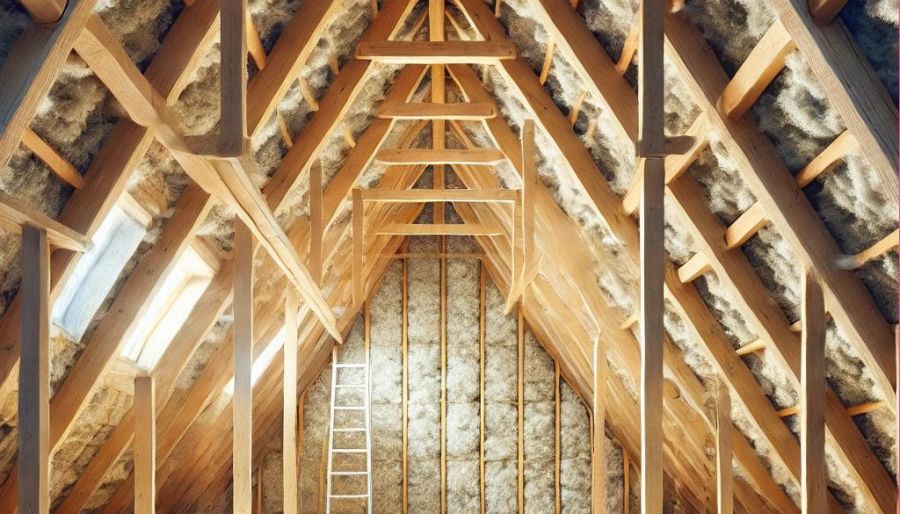
Are you looking for thermal comfort and cost-effective solutions for your home? Well-fitted loft insulation will help you reduce energy loss, which means lower bills. Soundproofing wool, on the other hand, can significantly reduce the amount of unwanted noise coming in from outside. This will be particularly appreciated by those living near busy roads. In today’s post, we’ll focus on the properties of mineral wool used for insulation, as well as how you can easily ensure both comfort and value for money when insulating your home. Find out more about these materials – we encourage you to read our post, in which we’ve focused on the pros and cons of mineral wool for loft insulation!
Types and benefits of mineral wool
Mineral wool is one of the most popular and versatile insulation materials on the market. We’ll take a closer look at the different types of mineral wool available, highlighting their unique characteristics to help you choose the best solution for your project.
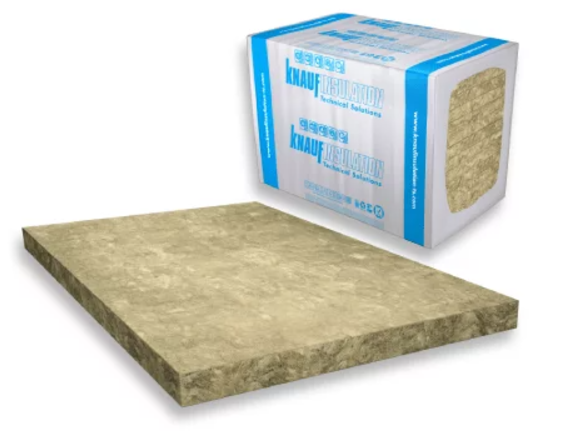
Rock wool
Thanks to raw materials such as basalt, the wool is not affected by high temperatures. The material also has high fire resistance, making it the ideal choice for spaces where effective fire protection is a priority. Rock wool also offers good insulating properties, which means it is successfully used in areas subject to higher structural loads, such as flat roofs.
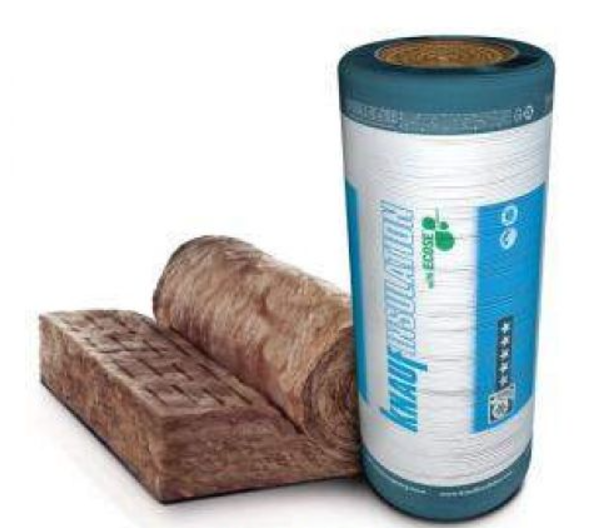
Glass wool
Glass wool is much lighter and more flexible than rock wool. The material is ideal for use particularly in pitched roofs, where it easily adapts to any unevenness in the substrate. The ease of installing the wool between the rafters and the low weight of the material mean that insulation work in the loft using this product is, for the most part, hassle-free.
The advantages of mineral wool
Mineral wool provides excellent thermal insulation, protecting buildings from heat loss and reducing heating costs. What’s more, this material effectively absorbs sound, making it ideal for spaces requiring good acoustics, such as blocks of flats or offices. Mineral wool is also notable for its fire resistance. You can read about these and other advantages of this material later on.
Thermal insulation
One of the main advantages of mineral wool used for loft insulation is its high thermal insulation properties. The material effectively reduces heat loss, which helps to lower heating or cooling costs depending on the season. Mineral wool in the loft helps maintain a constant temperature inside the rooms, thereby improving the energy efficiency of the entire space. These benefits will be appreciated by occupants of both residential and commercial buildings.
Sound insulation
Sound-absorbing mineral wool is excellent at absorbing airborne and impact noise. This is of considerable importance, particularly in loft spaces. It also has sound-insulating properties, which help to reduce noise coming from other rooms or from outside. This is an important consideration, particularly in multi-occupancy buildings and commercial premises, where unwanted noise is undesirable.
Fire resistance
Mineral wool is a non-combustible material. As such, the product is particularly valued in places where fire safety is of paramount importance. The material provides an additional protective layer not only for the occupants but also for the building’s structure. This is very important in various types of buildings.
Vapour permeability
Mineral wool is also vapour-permeable, which allows water vapour to flow freely. Thanks to this property, the risk of moisture condensation inside the building envelope is reduced. Vapour permeability prevents the growth of fungi and mould, and also protects the building from damage. The free flow of water vapour is particularly important in timber roof structures – in such spaces, moisture can lead to rot.
Ease of installation
Mineral wool is available in the form of mats and boards in various sizes, making it easy to adapt the insulation to the shape of the loft. Thanks to its high flexibility, the material is easy and convenient to install, for example on pitched roofs. The product, available in thicknesses of 5, 10 or 15 cm, allows the insulation layer to be tailored to the building’s specific energy requirements.
Disadvantages of mineral wool
Although mineral wool enjoys well-deserved popularity thanks to its exceptional properties, it is not without its drawbacks. When opting for this material, it is also worth understanding its limitations – from its susceptibility to damp to its cost, which sometimes exceeds that of other insulation solutions. Being aware of these aspects allows you to make the most of mineral wool’s potential, whilst minimising its weaknesses. Below, we outline the most important of these.
Susceptibility to moisture
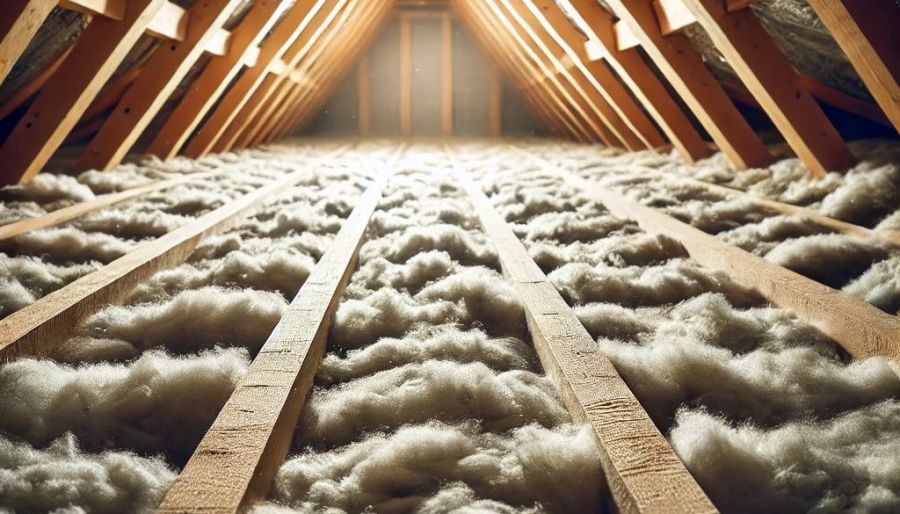
One of the drawbacks of mineral wool is its susceptibility to moisture. If exposed to water for a prolonged period, the insulating properties of this product may deteriorate significantly. For this reason, it is recommended to use suitable vapour barriers, which protect the material from the harmful effects of moisture and prevent it from penetrating the insulation layer.
Irritating properties
During installation, mineral wool fibres may cause irritation to the respiratory system, eyes and skin. To minimise potential risks as effectively as possible during installation, it is essential to use personal protective equipment. These include masks, goggles and gloves.
Price and availability
The price of mineral wool for loft insulation may be higher than that of some alternative insulation materials, which can sometimes pose a challenge for developers. Manufacturers sometimes require minimum orders for larger quantities of material, such as full pallets. Furthermore, in some regions, the availability of this product can be limited, which affects the project’s completion time.
As you can see, mineral wool is a popular insulating material. The undeniable advantages of this product include its high fire resistance and thermal insulation properties. Despite its susceptibility to moisture and its irritating properties, the material is a good choice for insulating a building. However, it is important to remember to take appropriate protective measures. We hope that from now on, the pros and cons of mineral wool will be clearer to you than before, enabling you to make a more informed choice in this regard.


