





Blog
Using glass wool to insulate the loft

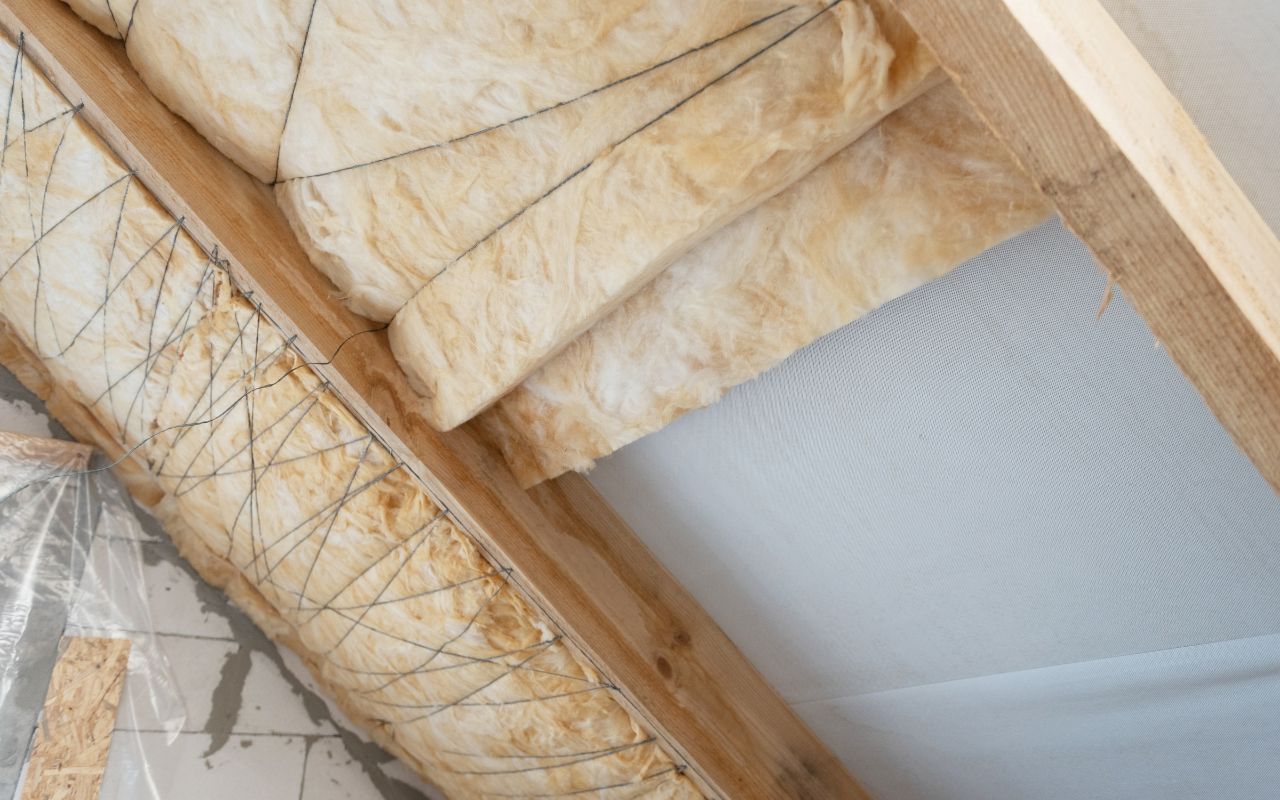
In a previous post We’ve already mentioned the benefits of insulating foundations with polystyrene – but what about roof insulation? It is estimated that as much as 25% of heat from a building can be lost through poorly insulated rafters, so look after your home and save on your bills by choosing the right materials. Knauf Insulation’s glass mineral wool is excellent at protecting a building from the cold, but that’s not the only reason it’s the ideal choice. Why is it the best solution? Find out by reading the article below!
Properties of Knauf Insulation mineral wool
Despite its name, it is not derived from sheep. It is produced by melting basalt (in the case of the rock version) or quartz sand (in the case of glass wool). Mixed with mineral additives, the materials undergo a defibration process, and a so-called binder is introduced into the newly formed fibres. Knauf Insulation’s mineral wool owes its structure to its near-total non-combustibility, water-repellency, as well as its acoustic and thermal insulation properties. Thanks to production using ECOSE® technology, we can also choose to use it as part of our environmental protection efforts — this method is 70% less energy-intensive compared to traditional methods of manufacturing mineral wool. Its production utilises rapidly renewable and biotechnological raw materials instead of petroleum-derived chemicals, which include the commonly used formaldehyde. As a result, the environmental footprint is reduced, and the Eurofins Gold certification ensures high air quality in buildings insulated with Knauf Unifit wool.
Glass wool or rock wool?
Which type of Knauf Insulation mineral wool is better? Both offer exceptional sound insulation and can withstand extremely high temperatures — although in this respect, the glass wool version is outperformed by the rock wool version. Furthermore, they are water-repellent, which prevents water from penetrating their structure. It is worth noting that it is essential for thermal insulation materials not to absorb moisture, as it is precisely this impermeability that makes them such effective protection. Their thermal insulation properties are also invaluable. However, there are two key differences between them — glass wool, thanks to its fine fibres, is more flexible and resilient, whilst its dense rock wool counterpart can withstand greater structural loads. Thus, the most significant difference appears to be that they are used for the thermal insulation of different types of surfaces. Rock wool mats are recommended for insulating building façades and flat roofs, whilst their flexible, glass-fibre counterpart is recommended for steeply pitched attics. It is therefore possible to use both types in a single structure, taking their differing properties into account.
Insulating the loft — step by step
Warm air is lighter than cold air because its molecules are less densely packed, hence the common saying that heat „escapes through the roof”. Properly installed insulation prevents this from happening, whilst also ensuring lower heating costs for a well-insulated building. Despite the many advantages of mineral wool, it is also important to remember that proper preparation for the installation of the mats is just as important. If the rafters are allowed to remain damp, mould that is hazardous to health may develop beneath the insulation. Below, we will therefore outline the steps for properly preparing the substrate for the installation of Knauf Insulation’s reliable mineral wool mats, followed by their expert installation.
Preparing the loft
The first step is to select materials suitable for the type of roof structure. If a temporary covering membrane has been used to protect against damp, the thickness of the mineral wool can be equal to the height of the rafters. However, if you have opted for full boarding instead of a membrane, you must remember to allow for a minimum 2-centimetre ventilation gap between the boards and the insulation by subtracting this from the rafter height. This will ensure that moisture is properly drained away and prevent the formation of mould. At this stage, you must also ensure that the roof truss is watertight — it must not be bent in any way or affected by fungal growth. It must be thoroughly maintained, and all services running alongside it must be sealed. At the very end of the preparatory stage, we need to carefully inspect the area around the wall plate, as this is where the greatest amount of warm air escapes.
Preparing the frames
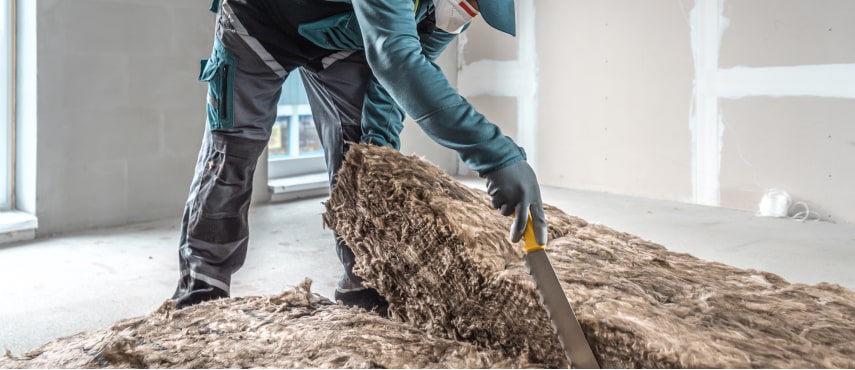
As proper thermal insulation involves laying the wool in two layers, we must first fit the spacer hangers onto the supporting frames. The supports should allow the mats to fit as tightly as possible against one another. To achieve this, it will be necessary to take the appropriate measurements — the sum of the two mat widths and the length of the frame profile are particularly important dimensions for us. Once the frames are secured, measure the width between the rafters again and cut the material to that length. With Knauf Insulation mineral wool, this is extremely straightforward thanks to the markings on its surface. Remember that you must allow an extra 2 centimetres when measuring, so that the mat fits as snugly as possible within the stud frame.
Fitting the mats
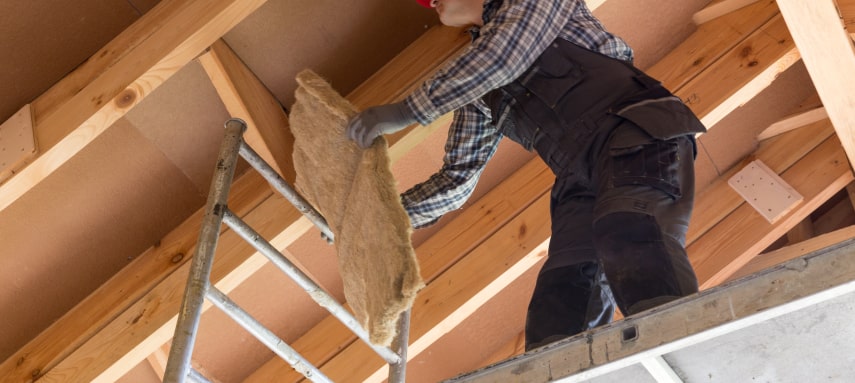
Once the mats have been cut to size, it is time to fit them. The two-centimetre allowance left earlier will allow the wool to be fitted with a slight press. However, if there is a membrane beneath our frame, we must remember not to press the mats in too forcefully — this could damage the material beneath the insulation. Let’s not forget to slot them into the fitted profile either. Once we’ve filled all the gaps with offcuts or strips of mineral wool, we can start laying the second layer of mats at right angles.
Protection for mats
Once we have laid two layers of thermal insulation, we can proceed to cover the mineral wool with a vapour barrier, which will ensure maximum thermal insulation for the building. You should add an extra 10 centimetres to the required dimensions of the foil. This excess will allow us to secure it tightly to the wall using sealant or tape. This approach will ensure we have enough material to properly install insulation that prevents water vapour from entering the interior of the house. Plasterboard can then be fixed to the surface prepared in this way, and the rest of the loft can be finished.
A considerable cost, but one that pays for itself
Mineral wool is a more expensive material than, for example, polystyrene used for insulating buildings, but it is an investment for the future. When installed correctly, it protects the house for years and is less susceptible to damage and ageing. The insulating performance of Knauf Unifit mineral wool rolls depends on the thermal conductivity coefficient λD, where a lower value indicates better protection for the loft. It is precisely this coefficient that also determines the price of a single roll.
As you can see, therefore, insulating your home using mineral wool mats is a wise investment that helps you save on heating costs and protects your home. Our range includes online building materials shop You’ll find a range of products from Knauf Insulation, a well-known and highly regarded manufacturer of reliable, warm mineral wool.


